Taiwan’s defence minister says Chinese naval operations in the Western Pacific resemble anti-access and area-denial drills, amid reports of unusually extensive ship movements near Taiwan and surrounding waters.
Taiwan’s assessment on November 10
Taiwanese Defence Minister Wellington Koo said China was conducting anti-access and area-denial training in the Western Pacific, involving the Liaoning aircraft-carrier group and other naval formations. His description is an assessment by Taiwan’s defence authorities. Beijing had not formally announced the latest movements as a new exercise. The distinction matters because the ships’ presence can be observed or reported without proving every operational objective attributed to them. Taiwan said it was monitoring the activity and exchanging intelligence with allies. The statement reflects Taipei’s concern about the scale and possible purpose of the deployments.
The scale of the reported deployment
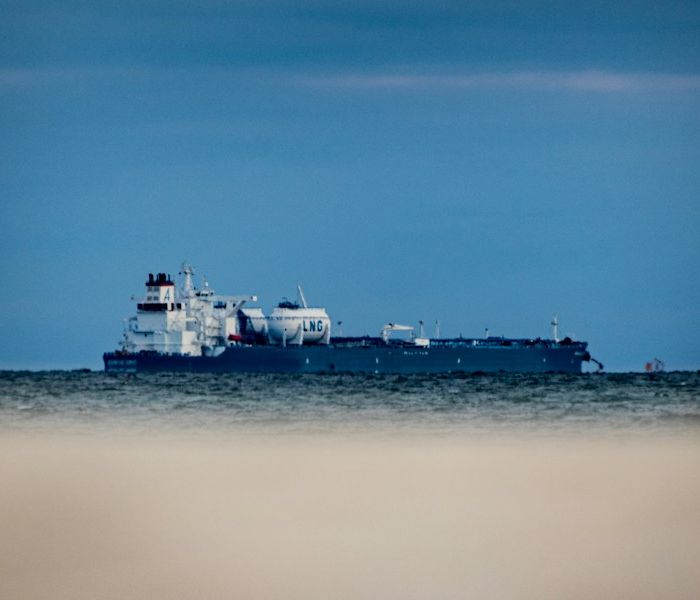
Reports described more than 100 Chinese naval and coast guard vessels operating around Taiwan, in the South China Sea and in Pacific waters. That figure refers to activity across a broad area rather than one tightly concentrated fleet at a single location. Numbers alone do not reveal the ships’ readiness, missions or command arrangements. Nevertheless, an unusually large maritime presence can complicate monitoring and force neighbouring militaries to devote more resources to tracking vessels. A useful assessment considers the types of ships, their movements, the duration of deployments and whether operations are coordinated.
What area denial means
Anti-access and area-denial, often abbreviated A2AD, refers to military methods intended to make it difficult for another force to enter or operate in a particular area. Such methods can involve ships, aircraft, submarines, missiles, sensors and electronic systems. The goal may be to delay or deter an outside intervention rather than to occupy territory. In the Taiwan context, analysts frequently discuss whether Chinese forces could complicate a response by the United States or regional allies during a crisis. A training operation does not by itself mean an invasion is imminent, but it can reveal capabilities and priorities.
The role of the Liaoning
Liaoning is one of China’s aircraft carriers and provides a platform for aviation operations at sea. Carrier training can involve aircraft launches and recoveries, escort coordination, air defence and long-distance navigation. Operating beyond coastal waters requires more complex logistics and communication than remaining near a home port. Taiwan’s reference to the Liaoning group therefore matters beyond the ship’s symbolic status. It suggests attention to how a larger formation might operate in the Western Pacific. Yet the available reporting does not establish the precise tasks conducted by every ship in the group.
Beijing’s previous explanation
China previously described Liaoning’s Western Pacific training as a routine exercise designed to test long-range, open-ocean combat capabilities. It said the activity was not aimed at any particular country. That explanation should be reported as Beijing’s position, not adopted as proof that neighbours have no reason for concern. Military training can serve several purposes simultaneously, including skills development, deterrence and political signalling. The most reliable way to assess its significance is to compare official statements with observed movements and the wider diplomatic environment.
Why geography changes the calculation
Taiwan sits near important maritime routes connecting the East and South China Seas with the broader Pacific. The geography makes access through surrounding waters important for military planning and commercial navigation alike. Ships moving east of Taiwan may operate in spaces that would be relevant to outside forces in a future crisis. But the presence of a warship in international waters is not automatically unlawful or a hostile act. Assessments must distinguish lawful navigation, declared exercises, unsafe manoeuvres and actions that directly threaten another vessel or aircraft.
The difference between navy and coast guard
Naval ships and coast guard vessels have different primary roles, even though both can contribute to state power at sea. A coast guard may enforce maritime claims or maintain a persistent presence in disputed waters, while a navy is designed for military operations. When both operate across a large area, observers may question whether activities are coordinated. Coordination cannot be assumed solely because vessels are Chinese. Tracking the mix of hulls and their behaviour is important for understanding whether an operation is focused on military training, maritime law enforcement or political pressure.
Aircraft activity around the island
Taiwan has also reported a sharp increase in Chinese military aircraft operating around the island. Aircraft sorties can test air-defence monitoring, gather information and create pressure through repeated appearances. Their significance depends on flight paths, proximity, duration and whether they cross sensitive lines or enter airspace. The commonly discussed Taiwan Strait median line is a political and operational reference, not an internationally agreed sovereign boundary. Coverage should therefore avoid describing every crossing as an incursion into Taiwanese territorial airspace.
The diplomatic calendar
The activity comes ahead of an APEC summit in Shenzhen, where US President Donald Trump is expected to meet Chinese President Xi Jinping. Taiwan is also approaching local elections. These events create a politically sensitive backdrop, but timing alone does not prove that the maritime operations were ordered to influence either event. Leaders may use military activity to communicate resolve, yet establishing intent requires more than coincidence. Diplomats and defence officials will be watching whether operations expand, contract or are accompanied by explicit political demands.
Taiwan’s position and Beijing’s claim
Beijing claims sovereignty over Taiwan and has not renounced the use of force. Taiwan rejects that claim and maintains that its people should decide their future. These positions underpin the long-running dispute and explain why military movements near the island attract intense scrutiny. They do not mean every exercise will produce conflict. The risk lies partly in the possibility that one side misreads another’s intentions, especially when many aircraft and vessels are operating near one another in contested political circumstances.
The danger of miscalculation
Large deployments increase the number of encounters that commanders must manage. Close approaches, communication failures or unexpected manoeuvres can escalate a routine patrol into a serious incident. Clear procedures for communication and separation can reduce risks even when the governments disagree sharply. The operational challenge is not only whether either side intends to use force, but whether crews can avoid accidental collisions or confrontations under pressure. Public rhetoric can intensify those risks when leaders feel compelled to respond to events before facts are fully established.
What would establish the next development
Observers should look for updated vessel and aircraft counts, verified positions, official exercise notices, changes in deployment patterns and statements from regional governments. Satellite imagery and independently checked tracking data may clarify what happened, although military vessels do not always transmit public location signals. A formal Chinese announcement could also change the interpretation. For now, the central development is Taiwan’s warning that extensive Chinese operations appear designed to practise restricting outside access. That is serious, but it should not be recast as proof that an attack has begun.
Frequently asked questions
What is A2AD?
It means anti-access and area-denial, methods intended to impede outside military operations.
Did China formally announce these new drills?
Not according to the November 10 reporting.
Does this mean an invasion has started?
No. The reports concern deployments and Taiwan’s assessment of military exercises.
Source and further reading: Reuters reporting, November 10, 2026. Featured image is illustrative, not documentary evidence of the event.