ASEAN’s leaders are approaching the 49th summit in Manila with a question that has challenged the bloc for five years: how can it keep channels open to Myanmar without rewarding a military leadership that has failed to halt violence or deliver the political dialogue ASEAN demanded? A new push by Thailand and other members to restore contact at senior levels is colliding with calls to preserve the bloc’s conditions. The decision will test ASEAN unity, its credibility with Myanmar’s people and its ability to shape events in its own neighbourhood.
Why the Manila summit matters now
The dispute is no longer simply about whether Myanmar’s military-backed authorities should be invited to a leaders’ meeting. It is about what ASEAN’s decisions mean in practice after years of limited progress on the Five-Point Consensus, the plan adopted after the 2021 coup. The bloc’s members still agree that the crisis needs a regional response, but they increasingly differ over whether exclusion is creating leverage or leaving ASEAN with too little influence over events.
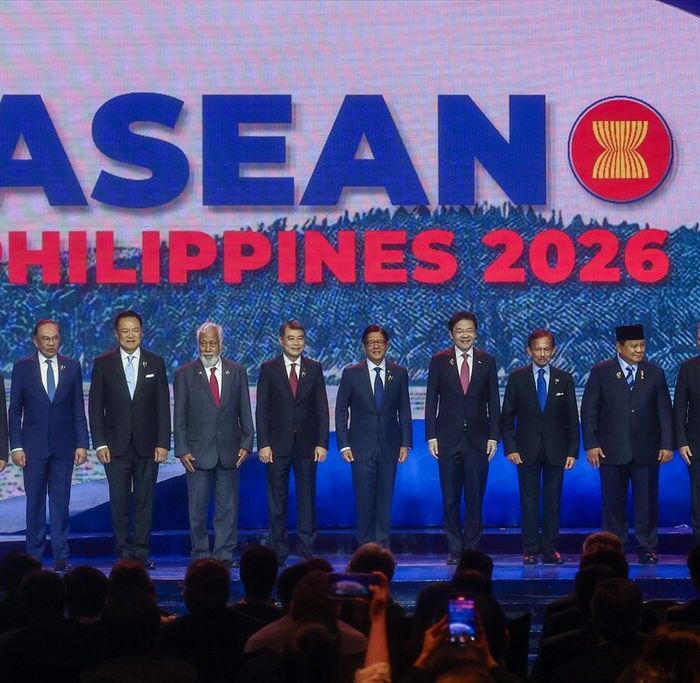
The timing gives the issue added weight. The Philippines is hosting the summit from November 15 to 17, while the chair’s special envoy and foreign ministers have been reviewing implementation of the consensus. Reuters reported on November 13 that leaders are expected to review Myanmar’s exclusion from high-level meetings as some members push for closer engagement. That makes the summit a test of policy, not merely a diplomatic calendar event.
The Five-Point Consensus and its unfinished promises
ASEAN’s five-point framework calls for an immediate cessation of violence, dialogue among all parties, a special envoy to facilitate mediation, humanitarian assistance and a visit by the envoy to meet all concerned parties. The framework was designed as a political process, not a single ceasefire announcement. Its purpose was to create conditions in which violence could fall, political actors could communicate and aid could reach people facing the consequences of the conflict.
At the May 2026 summit, ASEAN leaders again described the Five-Point Consensus as the bloc’s primary reference for addressing Myanmar’s crisis. They expressed concern about continued violence and minimal progress, urged protection for civilians and infrastructure, and called for conditions that would allow humanitarian assistance and inclusive dialogue. The reaffirmation matters because it shows that the consensus has not formally been abandoned, even as individual members experiment with different bilateral approaches.
A widening gap between collective policy and bilateral diplomacy
Reuters reported that Laos, Thailand, Vietnam, Cambodia and Malaysia have welcomed Myanmar’s military leader Min Aung Hlaing on official visits during 2026. Those engagements do not automatically amount to recognition of the military-backed administration, but they do show that several governments are willing to maintain direct contact even while ASEAN’s formal restrictions remain in place.
This distinction is central to the debate. A member state can argue that it needs working relations with the authorities that control territory, border crossings or aid routes, without claiming that the authorities have earned legitimacy. But when separate bilateral contacts become more visible than the bloc’s collective position, they can weaken the impression that ASEAN is acting as one organisation. The risk is that the military leadership can point to photographs, visits and official meetings as evidence that regional isolation is fading.
Thailand’s case for reopening high-level contact
Thailand has made the most explicit recent argument for easing restrictions. Foreign Minister Sihasak Phuangketkeow said after visiting Myanmar that Bangkok wants Myanmar’s foreign minister to participate in ASEAN meetings at foreign-minister level if sufficient progress can be made. He suggested that such participation could be possible by Thailand’s chairmanship in 2028 at the latest, while stressing that the decision belongs to ASEAN foreign ministers.
The argument for engagement is practical: direct access to officials may make it easier to convey ASEAN’s concerns, discuss border security and humanitarian needs, and seek cooperation on issues that do not stop at Myanmar’s borders. Thailand shares a long land border with Myanmar and faces direct consequences from displacement, trafficking, illicit economies and conflict spillovers. Supporters of contact therefore say a complete diplomatic freeze can make it harder to influence the people who hold power.
Why critics say engagement could become a reward
Opponents of early reintegration argue that the military authorities have not met the conditions that justified their exclusion. ASEAN Parliamentarians for Human Rights said on November 13 that the bloc should not bring the junta back into high-level meetings without meaningful progress on democracy, human rights and the Five-Point Consensus. The group also criticised individual governments for hosting Min Aung Hlaing and warned that inconsistent signals could encourage the leadership to wait out ASEAN’s restrictions.
The concern is not that diplomacy itself is illegitimate. It is that access to high-level meetings can carry symbolic value. A seat at a summit or foreign ministers’ gathering can be portrayed as acceptance, even if the host government describes the invitation as technical or conditional. Critics say any change should be tied to verifiable steps: reduced violence, access for humanitarian agencies, dialogue with a wider range of political actors and transparent reporting on implementation.
Myanmar’s political claims and the question of legitimacy
Myanmar’s military-backed Union Solidarity and Development Party won the elections held in December 2025 and January 2026, but the process took place without viable opposition and has not resolved the country’s conflict. The military authorities have presented the vote as a route toward political normalisation. ASEAN members must decide whether an election conducted under those conditions changes the basis on which the bloc has restricted high-level representation.
The distinction between formal state membership and political representation is important. Myanmar remains part of ASEAN as a country, and the bloc has repeatedly said it is an integral member. The restrictions have focused on high-level political participation by representatives of the military authorities. That allows ASEAN to preserve the principle of regional membership while withholding the diplomatic status normally associated with a government’s participation in leaders’ meetings.
The humanitarian test cannot be separated from diplomacy
The crisis is not an abstract contest over protocol. Fighting continues across the country, millions of people have been displaced and humanitarian needs remain severe. Reuters cited estimates that more than 100,000 people have been killed directly or indirectly since the coup, while large numbers of civilians have been pushed from their homes. Any diplomatic adjustment that is not accompanied by measurable improvements for people on the ground risks appearing detached from the scale of the emergency.
ASEAN’s own consensus places humanitarian assistance among its central commitments. The chair and special envoy therefore face a practical question: can they secure reliable access to communities in areas controlled by different armed actors, monitor how aid is distributed and ensure that assistance is not used as a substitute for political progress? A humanitarian mission can help build trust, but it cannot by itself settle the conflict or replace inclusive dialogue.
What leaders can decide in Manila
The summit can reaffirm the Five-Point Consensus, set clearer benchmarks for implementation, instruct the special envoy to report on progress and decide whether the existing rules on high-level representation should remain unchanged. Leaders could also endorse a more structured approach to humanitarian access and dialogue with Myanmar’s democratic forces and other stakeholders. These are decisions that can be made without pretending that the conflict has already been resolved.
A negotiated statement will probably preserve room for different national approaches, because ASEAN’s consensus-based style makes a sharp public split difficult. But ambiguity has costs. If leaders avoid setting measurable expectations, each member may continue to define progress differently. If they impose conditions that cannot be independently checked, the restrictions risk becoming symbolic. The most useful outcome would connect any future change in representation to clear, public and time-bound benchmarks.
ASEAN centrality and the wider regional contest
Myanmar’s crisis also tests ASEAN’s claim to centrality in regional diplomacy. China, India, Thailand and other neighbouring states have their own security and economic interests, while external powers are watching whether the bloc can shape the political environment around a member state. If ASEAN’s collective policy fragments, bilateral diplomacy by larger or geographically closer powers may become more influential than the organisation’s own mechanisms.
At the same time, ASEAN should avoid treating unity as an end in itself. A common statement that does not change conditions for civilians will not resolve the crisis. The bloc’s credibility depends on whether it can combine consensus with practical results: sustained access for aid, reduced violence, contact with a broad range of stakeholders and an honest account of what has or has not been achieved. The Manila meeting is an opportunity to make that approach more concrete.
What to watch after the summit
The clearest indicators will be the final language on the Five-Point Consensus, whether leaders keep high-level political restrictions in place, and whether the chair announces specific benchmarks for any future change. Observers should also watch for a public explanation of the special envoy’s mandate, the next steps for humanitarian access and whether ASEAN members agree to report progress in a way that can be compared over time.
A decision to maintain the current policy would not mean ASEAN has stopped engaging Myanmar. A decision to expand contact would not necessarily mean the bloc has recognised the military-backed authorities as legitimate. The substance lies in the conditions attached to each step. The next phase will be judged less by the language of unity than by whether the bloc can make the Five-Point Consensus more than a recurring diplomatic reference.
Frequently asked questions
Why has Myanmar been excluded from ASEAN’s high-level meetings?
ASEAN restricted high-level political representation after the 2021 coup because Myanmar’s military authorities made little progress on the bloc’s Five-Point Consensus, which calls for an end to violence, inclusive dialogue, humanitarian assistance and mediation.
Is ASEAN considering removing all restrictions on Myanmar?
The immediate debate concerns easing restrictions on high-level participation, including whether Myanmar’s foreign minister could attend ministerial meetings. Any change requires agreement among ASEAN members and is not automatic.
What should be watched at the Manila summit?
The final statement, any benchmarks for implementing the Five-Point Consensus, the future role of the ASEAN special envoy and whether leaders make humanitarian access and reduced violence measurable priorities.
Sources and further reading
- Reuters: ASEAN faces Myanmar dilemma as some members pursue closer ties
- ASEAN leaders’ May 2026 chair statement
- ASEAN Parliamentarians for Human Rights statement, 13 November 2026
- Myanmar Ministry of Foreign Affairs statement on the Five-Point Consensus, 23 July 2026
Featured image credit: Gunawan Kartapranata / Wikimedia Commons, CC BY-SA 3.0; archival flags at ASEAN headquarters, Jakarta, 12 December 2010.