Geopolitics | Europe and transatlantic security | 15 November 2026
NATO will not hold the leaders’ summit planned for Albania in 2027, and several other high-level meetings are being removed from next year’s calendar. The decision may reflect a more streamlined alliance, but it arrives amid political friction over defence spending, Ukraine and the Iran conflict. The question is whether fewer formal gatherings will sharpen NATO’s work or make it harder for allies to manage disagreements.
A calendar change with political consequences
NATO is changing the rhythm of its political diplomacy. The alliance will not hold the leaders’ summit planned for Albania in 2027, Albanian Prime Minister Edi Rama has said, adding that Tirana could host a summit no earlier than 2028. Secretary-General Mark Rutte has said high-level meetings will be scheduled when needed. The shift extends beyond one leaders’ gathering: NATO has cancelled its October 2026 defence ministers’ meeting, plans no equivalent meeting in October 2027 and has scheduled only one foreign ministers’ meeting next year.
It would be premature to treat the decision as evidence that NATO is breaking apart. The alliance continues to operate its military command structures, plan collective defence and coordinate support for Ukraine. Yet summit diplomacy performs a political function that routine military planning cannot fully replace. Leaders use these meetings to set strategic direction, settle disagreements, announce commitments and reassure publics that the alliance remains politically coherent. A thinner calendar may make the organisation more efficient, but it also reduces predictable opportunities for political coordination.
There is a practical case for fewer meetings. Leaders’ summits require extensive security arrangements, diplomatic preparation, travel and coordination across 32 governments. They can become costly exercises in producing declarations that repeat positions already agreed by ministers and ambassadors. If NATO’s immediate priority is implementing decisions already taken, a flexible schedule could free time and resources for procurement, readiness, logistics and defence production.
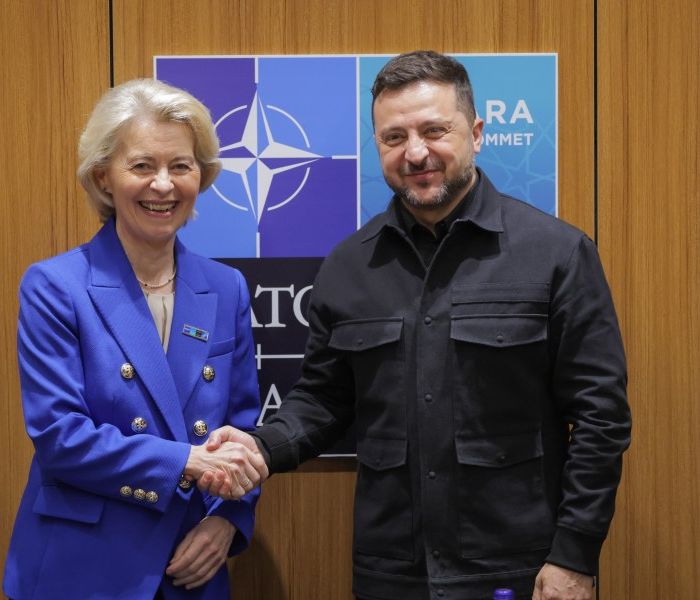
The July 2026 Ankara summit focused on translating defence spending targets into capabilities. NATO announced new procurement commitments and allies reaffirmed support for Ukraine. If the next phase is about delivering equipment, increasing industrial output and implementing national plans, governments may reasonably prefer technical work and ministerial coordination over another large leaders’ gathering. The alliance’s argument is that political meetings should take place when they are useful, not simply because a calendar says they must.
Why alliance coordination is under pressure
But the political costs of fewer meetings should not be dismissed. NATO is not only a military headquarters; it is an alliance of governments with different threat perceptions, domestic pressures and strategic priorities. A regular leaders’ summit provides a predictable forum to raise concerns before they become public disputes. It also offers a moment when smaller members can make their security concerns visible to the most powerful allies. Less frequent meetings may increase reliance on bilateral pressure and emergency diplomacy.
The decision arrives during a period of visible strain. Member governments have debated how much each should spend on defence, how to distribute the burden of supporting Ukraine and how the Iran conflict affects NATO’s priorities. The United States remains the alliance’s most powerful military actor, while European allies and Canada are under pressure to assume greater responsibility for the continent’s defence. These questions are linked to the practical availability of ammunition, air defence, intelligence, logistics and deployable forces.
Russia’s war against Ukraine continues to shape NATO’s force posture and planning. The conflict has accelerated defence investment and exposed weaknesses in ammunition stocks and industrial capacity. At the same time, the Middle East conflict has created additional questions about air defence, maritime security and the risk of wider escalation. Governments must also invest in cyber defence, infrastructure protection and the ability to move forces rapidly across Europe. A calendar with fewer summits can work only if it does not weaken the political oversight of these connected priorities.
Albania’s delayed hosting role
Albania’s postponed hosting role is symbolically significant. Hosting a NATO summit would have been a major diplomatic milestone for Tirana and an opportunity to underline its place in European security. The postponement does not remove Albania from NATO decision-making or reduce its treaty protections. It does delay a visible moment of recognition for a member that has sought to present itself as a committed contributor. The country’s projected defence spending has also been discussed, with the Associated Press reporting an expected level of around 2.15 per cent of GDP. That figure is part of the context, not a proven single explanation for the schedule change.
For Albania, the more important question is how it demonstrates its contribution between now and any future hosting opportunity. Summit hosting is not an entitlement that automatically follows from an earlier announcement. NATO can change its calendar when strategic, political or logistical priorities shift. A country’s standing in the alliance is ultimately shaped by the capabilities it provides, the reliability of its commitments and its participation in collective defence.
Ukraine and the need for political oversight
Ukraine remains central to NATO’s security debate, even though it is not a member of the alliance. The war has driven changes in defence spending, ammunition production, air defence and military readiness across Europe. NATO members have repeatedly reaffirmed support for Ukraine while debating the scale, timing and form of assistance. Regular leaders’ meetings help maintain political attention and provide opportunities for Kyiv to engage directly with allied governments. If summits become less frequent, alternative channels must keep commitments coordinated and prevent support from drifting apart.
That does not mean a leaders’ summit is the only way to sustain Ukraine support. Foreign ministers, defence ministers, ambassadors and military commanders can coordinate policy continuously. NATO can also convene extraordinary meetings when circumstances demand. But a flexible calendar should not become an excuse for weaker political oversight. Governments need regular opportunities to assess whether promised equipment is delivered, whether national support plans are compatible and whether the alliance’s long-term approach remains credible.
The real measure: capabilities, not ceremonies
The most persuasive response to concerns about fewer meetings will be visible progress. NATO needs stronger air and missile defence, resilient logistics, credible reinforcement plans and sustainable production of ammunition and equipment. Higher defence budgets matter only if they produce capabilities that can be deployed when required. If governments announce targets but delay procurement, readiness will not improve. If national industries cannot meet demand, the alliance will remain vulnerable despite impressive spending figures.
There is also a public communication challenge. Confidence in NATO depends partly on whether citizens understand what the alliance is doing and why. Leaders’ summits provide a visible platform for that explanation. A reduced calendar means NATO will need more consistent communication about exercises, readiness, defence production and the implementation of decisions. It will also need to explain how smaller states can raise concerns and how collective decisions are made between formal summits.
A more flexible calendar could make NATO stronger if the alliance uses the time to focus on execution. A smaller number of carefully prepared meetings may be more useful than a crowded schedule of gatherings that produce little beyond negotiated language. But the opposite outcome is possible. When tensions rise, regular political contact can prevent misinterpretation and help governments find compromise. Without predictable meetings, disputes may be managed through public statements, bilateral pressure or last-minute emergency calls.
The right test is not the number of summits. It is whether allies can still make timely decisions together. Three developments will matter in 2027: whether the revised ministerial calendar leaves enough room for political consultation; whether European allies and Canada turn higher defence budgets into deployable capabilities; and whether NATO maintains a coherent approach to Ukraine while responding to new demands created by instability in the Middle East. The postponement of the Albania summit is not a verdict on NATO’s future. It is a test of whether the alliance can trade ceremony for delivery without losing the political contact that holds it together.
Watch: NATO leaders’ decisions at the 2026 Ankara Summit
NATO’s official July 2026 summit summary. It provides background on alliance priorities and is not a report on the 2027 calendar change.
Frequently asked questions
Has NATO cancelled its 2027 summit in Albania?
Yes. Albania’s Prime Minister Edi Rama said a leaders’ summit will not take place in 2027. He said Tirana could host one no earlier than 2028, while NATO says meetings will be scheduled when needed.
Does skipping a summit mean NATO is weakening?
Not by itself. NATO’s military structures and collective-defence commitments continue. The risk is that fewer political meetings could make it harder to manage disagreements if alternative consultation channels are not effective.
Why does NATO need leaders’ summits?
Summits allow heads of government to set strategic direction, settle political disputes, announce commitments and demonstrate unity. They are not required for daily military coordination, but they play an important political role.
Sources and further reading
- Associated Press: NATO to skip a leaders’ summit in Albania next year as high-level meetings are scaled back (15 November 2026).
- NATO: Secretary-General Mark Rutte’s press conference following the 2026 Ankara Summit.
- NATO Communications and Information Agency: The Ankara Summit Declaration.
- NATO: Meeting of the North Atlantic Council at the 2026 Ankara Summit.