


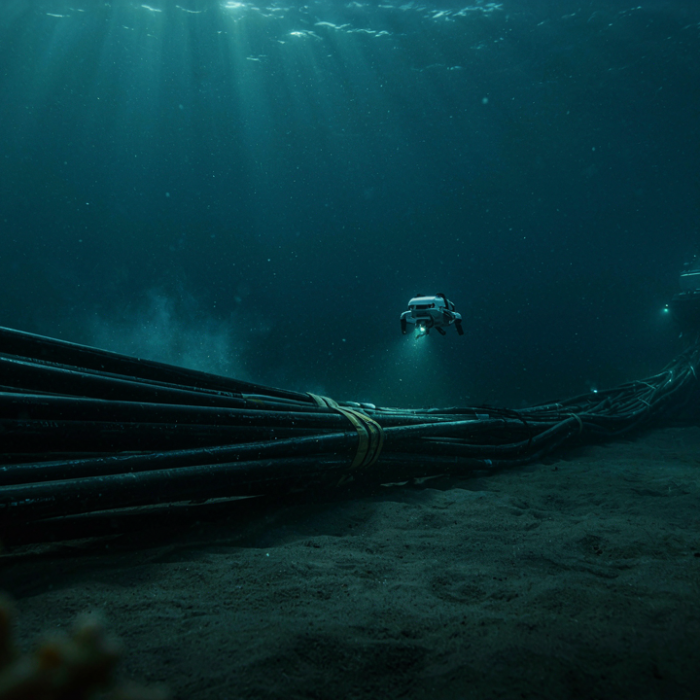
The world’s internet appears to exist in the cloud, but much of it physically travels beneath the oceans. Thousands of kilometres of submarine cables connect continents, financial centres and military networks. As competition between major powers intensifies, these cables are becoming critical geopolitical infrastructure. The next major confrontation between global powers may not begin with a missile or aircraft. It could begin somewhere beneath the sea.

Europe is facing a growing series of suspected sabotage operations, drone incursions and cyberattacks as the war in Ukraine increasingly spills into the security environment of NATO countries. The suspected attack at Leipzig/Halle Airport has become one of the most serious cases, but Germany has not officially attributed it to Russia. The larger question is whether Moscow is deliberately testing how far it can push NATO without triggering a direct military confrontation.
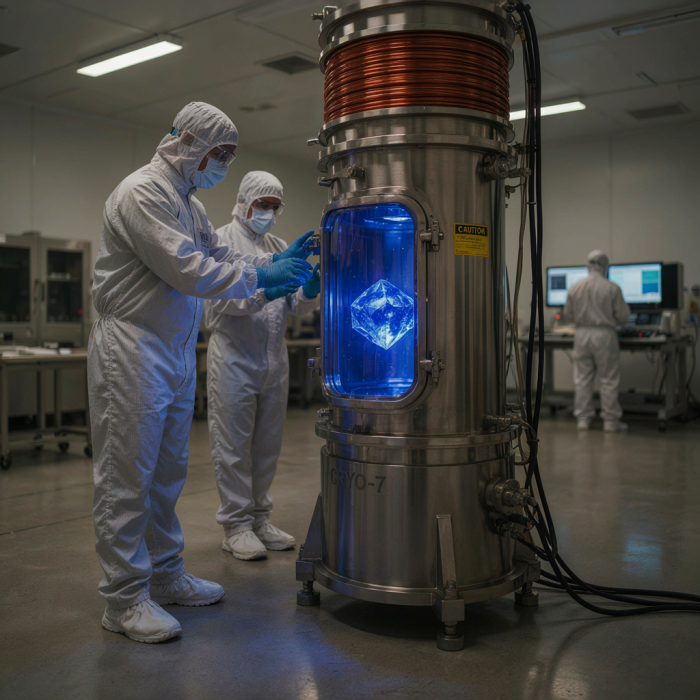
Scientists have demonstrated a surprising new way to enhance superconductivity: manipulating the quantum fluctuations that exist even in apparently empty space. The research, published in Nature, provides experimental evidence that vacuum fluctuations can influence the behaviour of superconducting materials and could eventually offer a new method for controlling quantum states of matter.
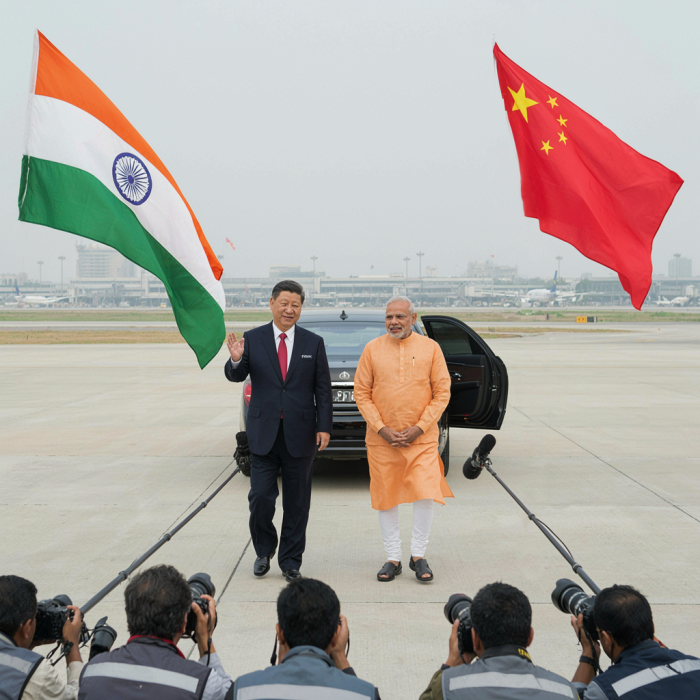
Seven years after his last visit to India, Xi Jinping is expected to return to New Delhi for the September 2026 BRICS summit. At the same time, India’s National Security Adviser Ajit Doval is in Beijing for high-level boundary talks with Wang Yi. The timing is significant. After the Galwan clash and years of military tension along the Himalayas, India and China appear to be testing whether strategic rivalry can coexist with diplomatic and economic engagement.
A new geopolitical fault line is emerging across Asia. Washington is reducing some military exercises with South Korea while President Donald Trump renews efforts to engage North Korean leader Kim Jong Un. The developments have triggered concern among US allies including Japan, South Korea, Taiwan and India, which are reassessing how dependable American security commitments will be. At the same time, China is watching closely.
Scientists at the University of Göttingen have developed a method for reconstructing the three-dimensional quantum wavefunction of a molecule. By combining photoelectron spectroscopy, ultrashort soft-X-ray pulses and new mathematical algorithms, researchers produced detailed images of molecular orbitals at a scale smaller than the distance between carbon atoms. The breakthrough could eventually allow scientists to make ultrafast 3D “movies” showing how molecules change during chemical and electronic processes.
The US Navy has publicly revealed the AIM-424 Malice, a new long-range air-to-air missile designed to engage targets more than 250 nautical miles away. Even more significant, the missile has been shown inside the F-35C’s internal weapons bay, allowing the stealth fighter to carry a very-long-range weapon without sacrificing its low-observable configuration. The system could reshape how future air combat is fought.
Britain has announced that Ukraine will gain access to classified technology needed to produce components for Storm Shadow long-range cruise missiles. The move came during British Prime Minister Andy Burnham’s first foreign visit to Kyiv and immediately triggered a strong response from Moscow. The decision could mark an important shift from supplying Ukraine with finished weapons toward helping it build more of its own long-range strike capabilities.
Scientists have identified nine existing medicines that may help slow neurological damage associated with childhood dementia. Using patient-derived brain cells and AI-assisted drug screening, researchers found that several already-approved medicines improved cellular function in laboratory models of Sanfilippo syndrome. The discovery could open a potentially faster route toward clinical testing, although human trials are still needed.