

For decades, one question has fascinated scientists and space enthusiasts alike: Did life ever exist on Mars? While the answer remains uncertain, NASA’s latest findings have brought humanity closer than ever to solving one of the greatest mysteries in science.
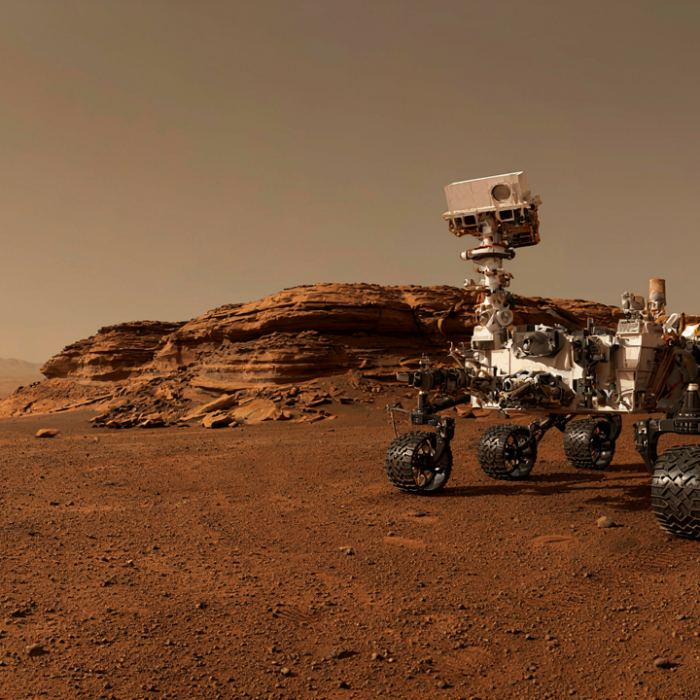
The Perseverance rover, currently exploring Mars’ Jezero Crater, has collected rock samples containing potential biosignatures—chemical and structural features that could indicate ancient microbial life. Although scientists emphasize that this is not evidence of living organisms, the discovery represents one of the most promising developments in Mars exploration to date.
What Did NASA Discover?
Perseverance has been studying sedimentary rocks that formed billions of years ago when Jezero Crater is believed to have contained a large lake. These rocks preserve minerals and organic compounds that may have formed in environments capable of supporting microbial life.
Researchers detected patterns that resemble biosignatures found on Earth. These include specific mineral deposits and organic molecules that are often associated with biological activity. However, similar features can also be produced through non-biological geological processes.
Because of this, NASA has stressed that the discovery should be viewed as an exciting scientific clue—not definitive proof of ancient Martian life.
Why This Discovery Matters
Mars was once a dramatically different planet. Billions of years ago, it possessed rivers, lakes, and possibly even oceans. It also had a thicker atmosphere capable of sustaining liquid water, making it a far more hospitable environment than the cold, dry world we see today.
If microbial life did emerge during that period, it would suggest that life may develop wherever suitable conditions exist. Such a finding would reshape our understanding of biology and increase the possibility that life exists elsewhere in the universe.
Even if these samples ultimately reveal no evidence of ancient organisms, they provide valuable insights into the geological history and evolution of Mars.
The Importance of Sample Return Missions
One of the biggest challenges is that current rover instruments have limitations. While Perseverance can identify promising rocks, confirming the presence of ancient life requires sophisticated laboratory equipment available only on Earth.
NASA and its international partners are continuing to develop plans for future Mars sample return missions that would transport these carefully sealed samples back to Earth for detailed analysis.
Scientists believe these laboratory examinations could finally determine whether the detected biosignatures were created by biological activity or natural geological processes.
What Happens Next?
The scientific community is approaching the discovery with cautious optimism. Researchers worldwide will continue analyzing data from Perseverance while planning future missions capable of answering the question once and for all.
Whether the findings represent ancient microbes or unusual geology, the mission has already transformed our understanding of Mars and identified locations that deserve further exploration.
For now, the Red Planet continues to remind us that the universe still holds extraordinary mysteries waiting to be uncovered.
Frequently Asked Questions
Has NASA found life on Mars?
No. NASA has found potential biosignatures, but there is currently no confirmed evidence that life existed on Mars.
What are biosignatures?
Biosignatures are chemical, mineral, or structural features that may indicate past or present biological activity.
Why is Jezero Crater important?
Scientists believe Jezero Crater once contained an ancient lake, making it one of the best places on Mars to search for evidence of past life.
When will scientists know for sure?
A definitive answer will likely require Mars rock samples to be returned to Earth for detailed laboratory analysis.