

The next chapter in human space exploration is unfolding hundreds of kilometers above Earth. The Axiom-4 (Ax-4) mission has successfully reached the International Space Station (ISS), marking another important step toward the commercialization of low Earth orbit and strengthening international cooperation in space.
The mission represents much more than another crew rotation. It demonstrates how governments, private companies, and astronauts from multiple nations are working together to push scientific discovery beyond Earth’s atmosphere.
With dozens of experiments scheduled during the mission, Axiom-4 is expected to contribute valuable knowledge in medicine, biology, materials science, and future deep-space exploration.
A New Generation of Commercial Spaceflight
Only a decade ago, sending astronauts into orbit depended almost entirely on government agencies.
Today, companies such as Axiom Space and SpaceX have transformed human spaceflight into a partnership between public institutions and private industry.
The Axiom-4 mission showcases this transformation.
Using a SpaceX Dragon spacecraft launched aboard a Falcon 9 rocket, the crew traveled safely to the ISS, where they will spend approximately two weeks conducting scientific investigations and educational outreach activities.
Commercial missions like Axiom-4 are laying the groundwork for a future in which access to space becomes more frequent, affordable, and available to a wider range of countries and researchers.
Why the Mission Matters
The International Space Station is one of humanity’s greatest scientific laboratories.
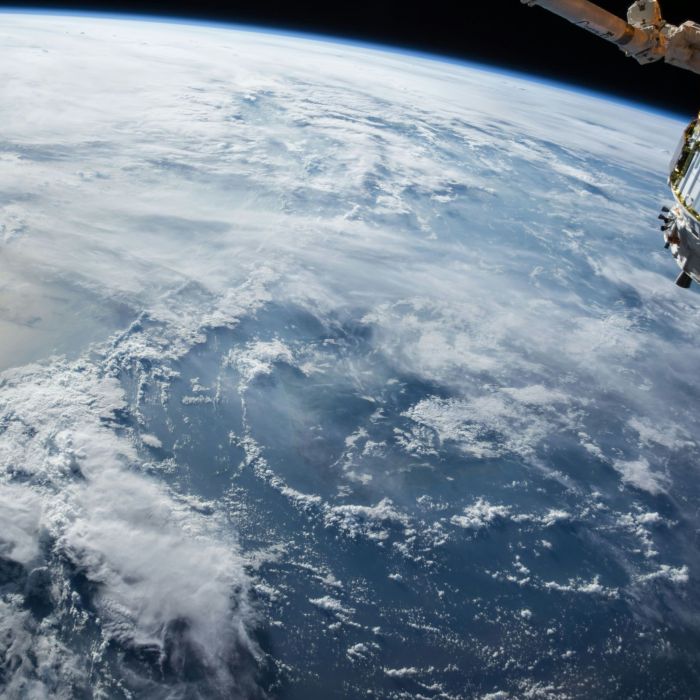
Orbiting Earth every 90 minutes at an altitude of approximately 400 kilometers, the ISS provides researchers with an environment of continuous microgravity.
This unique environment allows scientists to perform experiments impossible on Earth.
The Axiom-4 crew will participate in research covering several important areas:
- Human health in space
- Muscle and bone loss
- Plant growth
- Stem cell research
- Artificial intelligence
- Advanced manufacturing
- Fluid dynamics
- Earth observation
- Space medicine
The results may improve healthcare on Earth while preparing astronauts for future missions to the Moon and Mars.
International Cooperation Takes Center Stage
One of the most remarkable aspects of Axiom-4 is its international character.
Astronauts representing different countries are working together toward common scientific goals.
Space exploration has increasingly become a global effort rather than a competition.
Each participating nation contributes expertise, technology, and scientific knowledge that benefits the international community.
This collaborative approach strengthens diplomatic relationships while accelerating innovation across multiple scientific disciplines.
Scientific Experiments That Could Change the Future
The crew is expected to carry out more than 60 scientific investigations during their stay aboard the ISS.
Many focus on understanding how the human body adapts to prolonged exposure to microgravity.
Researchers are studying:
- Changes in cardiovascular health
- Brain function
- Vision
- Immune system responses
- Cellular aging
- Protein crystal growth
- Pharmaceutical development
These experiments could lead to better treatments for diseases on Earth while improving astronaut health during long-duration missions.
Another important research area involves manufacturing advanced materials that cannot be produced under Earth’s gravity.
Scientists hope these discoveries could eventually improve electronics, medicine, and industrial technologies.
Preparing for Missions Beyond Earth
Although Axiom-4 is traveling only to low Earth orbit, the knowledge gained from the mission has much broader implications.
NASA and its international partners are preparing for ambitious missions under the Artemis program, which aims to establish a sustainable human presence on the Moon before eventually sending astronauts to Mars.
Every mission to the ISS provides valuable operational experience that will support these future journeys.
Engineers continuously improve spacecraft systems, life-support technologies, communication methods, and emergency procedures using data collected during missions like Axiom-4.
The experience gained today will help ensure the success of tomorrow’s deep-space explorers.
The Growing Role of Private Space Companies
The success of Axiom-4 highlights a major shift in the global space industry. For decades, space exploration was almost exclusively led by government agencies such as NASA, Roscosmos, and the European Space Agency (ESA). Today, private companies are becoming key players in launching astronauts, building spacecraft, and supporting scientific missions.
Axiom Space aims to build the world’s first commercial space station, which is expected to eventually replace parts of the aging International Space Station after its planned retirement. Missions like Axiom-4 serve as stepping stones toward that goal, allowing the company to gain operational experience while demonstrating the viability of commercial space habitats.
This transition could significantly reduce costs and open new opportunities for universities, startups, and emerging space nations to conduct research in orbit.
Benefits for Life on Earth
While space missions often capture public imagination through breathtaking images and technological achievements, many of their greatest benefits are felt here on Earth.
Research conducted aboard the ISS has already contributed to advances in:
- Medical imaging technologies
- Water purification systems
- Improved medical devices
- Earth observation and climate monitoring
- Advanced robotics
- Fire safety research
- Agricultural innovation
The scientific investigations performed during Axiom-4 are expected to continue this tradition, with findings that may improve healthcare, manufacturing, environmental monitoring, and food production.
Inspiring the Next Generation
Another important objective of Axiom-4 is education. Crew members are participating in live educational events, connecting with students and researchers around the world.
These interactions inspire young people to pursue careers in science, technology, engineering, and mathematics (STEM). As commercial spaceflight becomes more accessible, today’s students may become tomorrow’s astronauts, engineers, or mission scientists.
Encouraging scientific curiosity is one of the mission’s most lasting contributions.
Challenges Still Ahead
Despite its success, human spaceflight remains complex and expensive.
Future missions must overcome challenges such as:
- Protecting astronauts from deep-space radiation
- Developing reliable long-duration life-support systems
- Reducing launch costs
- Managing space debris
- Ensuring sustainable operations in orbit
Every successful mission provides valuable data that helps engineers solve these challenges and prepares humanity for more ambitious exploration beyond Earth’s orbit.
Looking Toward the Future
The Axiom-4 mission represents more than a routine visit to the International Space Station. It reflects the changing landscape of space exploration, where collaboration between governments and private companies is accelerating innovation.
As commercial missions become increasingly common, researchers expect greater access to microgravity laboratories, faster scientific progress, and broader international participation in space research.
With plans for lunar bases, Mars missions, and commercial space stations advancing steadily, Axiom-4 serves as another important milestone in humanity’s journey beyond Earth.
Conclusion
The successful arrival of the Axiom-4 crew at the International Space Station demonstrates how international cooperation and commercial innovation are reshaping the future of space exploration.
From groundbreaking scientific research to technological development and educational outreach, the mission highlights the growing importance of low Earth orbit as a platform for discovery.
As humanity prepares for missions to the Moon and eventually Mars, every experiment conducted aboard the ISS brings us one step closer to becoming a truly spacefaring civilization.
Frequently Asked Questions?
Axiom-4 is a commercial astronaut mission that transported an international crew to the International Space Station to conduct scientific research and educational activities.
The mission strengthens international collaboration, advances scientific research in microgravity, and supports the future of commercial human spaceflight.
The mission includes more than 60 scientific investigations across medicine, biology, engineering, and materials science.
The astronauts traveled aboard a SpaceX Dragon spacecraft launched on a Falcon 9 rocket.
Research from the ISS contributes to advances in medicine, technology, environmental science, manufacturing, and future space exploration.