Geopolitics | Southeast Asia | 15 November 2026
The 49th ASEAN summit has delivered two consequential signals: negotiators say roughly four-fifths of the South China Sea Code of Conduct text is provisionally agreed, while leaders have endorsed a phased, progress-based approach to Myanmar. Neither development resolves the region’s hardest disputes, but both show how the bloc is trying to preserve cooperation without pretending its members share identical interests.
Two diplomatic signals, neither a final settlement
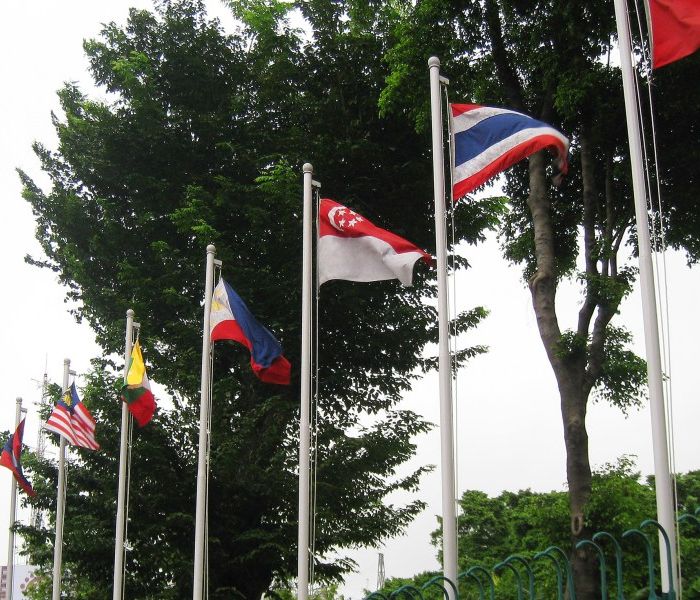
ASEAN’s 49th leaders’ summit opened in Manila on 15 November at a moment when the region is being asked to manage several crises at once. The conflict involving Iran has pushed energy security higher on the agenda; strategic competition between Washington and Beijing continues to shape trade and security choices; and the South China Sea remains a source of recurring friction. Myanmar’s civil war still tests the organisation’s credibility and its ability to act collectively. The Philippines, as chair, has framed the gathering around unity and practical cooperation. The first day produced two important signals: negotiators have provisionally agreed on about 80 per cent of the text for a South China Sea Code of Conduct, while leaders have endorsed a phased, progress-based approach to Myanmar.
These developments are not final settlements. They are evidence that ASEAN is trying to keep diplomacy moving without claiming that its members have identical interests. The bloc’s strength has always been its ability to convene governments with different political systems, economic dependencies and security priorities. Its weakness is that consensus can be difficult when a member state is directly involved in a dispute or when external partners exert competing pressure. The Manila outcomes therefore need to be judged by what they make possible next, not simply by the language used in summit statements.
The South China Sea announcement is significant because the proposed code has been discussed for years. The waterway carries major volumes of global trade and energy, and overlapping maritime claims have produced repeated confrontations involving coast guards, fishing fleets and military forces. A common framework could help clarify expectations, reduce the risk of miscalculation and establish channels for managing incidents. Yet the reported 80 per cent figure does not mean that the agreement is almost ready in any practical sense. The final sections may contain the most politically sensitive questions, including the code’s geographic scope, the meaning of key terms, the obligations placed on parties and whether the instrument will be legally binding.
Those unresolved details matter. A document that merely restates broad principles may have limited effect when vessels meet in disputed waters. A more useful code would set out procedures for communication, restraint and incident management, while remaining consistent with international law, including the 1982 United Nations Convention on the Law of the Sea. The Philippines has stressed that international law must remain the foundation. Other claimant states, including Vietnam, Malaysia and Brunei, also have an interest in ensuring that the final text does not imply a settlement of sovereignty claims or restrict lawful activities.
The South China Sea: what the 80 per cent figure does and does not mean
China’s participation is indispensable because it is a major claimant and the region’s strongest military and economic power. But the imbalance between China and the smaller Southeast Asian states makes the process delicate. ASEAN can give its members collective diplomatic weight, yet the organisation is not a military alliance and cannot force a common position on every member. Governments have different levels of economic exposure to China and different experiences of maritime pressure. A negotiated code must therefore be precise enough to matter while acceptable enough to keep all parties engaged.
The next stage will test whether the 80 per cent milestone can survive the difficult final negotiations. The remaining language may concern the exact area covered, how the code relates to existing maritime law, what constitutes a breach and whether parties can invoke any form of dispute-resolution mechanism. Even a completed text will not erase territorial disputes or guarantee that every encounter at sea is peaceful. Its value will depend on whether governments use it when tensions rise, rather than treating it as a diplomatic trophy.
Myanmar: a calibrated opening with conditions
Myanmar is the other major political test. ASEAN leaders agreed to pursue calibrated engagement through a phased, progress-based approach, taking account of developments on the ground. Philippine Foreign Secretary Theresa Lazaro said any gradual restoration of full political representation would depend on sustained and concrete progress in implementing the bloc’s Five-Point Consensus. The wording indicates a possible adjustment in diplomatic tactics, not an unconditional return to business as usual.
The Five-Point Consensus was adopted after Myanmar’s 2021 military takeover. It calls for an end to violence, dialogue among relevant parties, mediation by an ASEAN special envoy, humanitarian assistance and engagement with all parties. Implementation has been limited, while conflict and displacement have continued. ASEAN has faced criticism both for failing to secure progress and for excluding the military authorities from high-level meetings. A phased approach appears designed to preserve contact and influence without abandoning the conditions that the bloc has already set.
That balance will be hard to maintain. Complete isolation can reduce access for diplomats and humanitarian agencies. Unconditional re-engagement, by contrast, could be interpreted as rewarding the authorities without measurable improvements for civilians. A credible progress-based policy needs clear benchmarks: reductions in violence, reliable humanitarian access, meaningful dialogue and practical cooperation with the special envoy. Without transparent criteria, members may interpret progress differently and the new approach could deepen internal divisions.
Energy security moves up the regional agenda
Energy security has become a more urgent concern because the Middle East conflict is affecting prices and supply expectations. Many ASEAN economies rely on imported oil and gas. Higher fuel costs raise transport and electricity bills, put pressure on household budgets and complicate industrial planning. The impact is uneven: governments with greater fiscal capacity can cushion some of the shock, while lower-income households and fuel-importing businesses feel it more quickly. Energy security is therefore not only a question of national reserves; it is also a question of regional coordination and social resilience.
Singapore Prime Minister Lawrence Wong used the summit plenary to call for deeper digital-economy cooperation, stronger energy resilience and broader external networks. He urged members to prioritise seamless cross-border transactions and ratification of the ASEAN Petroleum Security Agreement. These proposals are practical because they do not require ASEAN to adopt one foreign policy. They do require members to share information, coordinate emergency planning and strengthen the infrastructure that keeps energy and essential goods moving during disruption.
The ASEAN Power Grid, petroleum-security arrangements and more resilient supply chains could help members manage shocks that no single country can fully control. But agreements only matter when they are implemented. Governments must decide how emergency supplies would be released, how cross-border electricity flows would be managed and how costs would be shared. The Manila discussion provides an opportunity to move these questions from broad declarations toward measurable commitments and timelines.
ASEAN’s balancing act between major powers
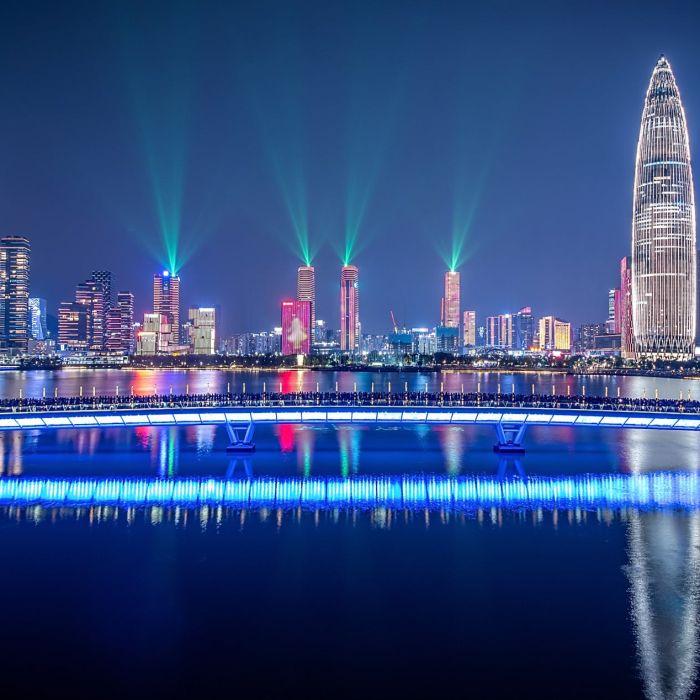
The wider diplomatic challenge is to keep ASEAN central while major powers compete for influence. Southeast Asian governments want trade, investment, technology and security partnerships from a range of countries. They also want to avoid being forced into a binary choice between Washington and Beijing. The Manila summit takes place immediately before the APEC leaders’ meeting in Shenzhen on 18 and 19 November, giving regional governments an opportunity to set out priorities before the great-power spotlight shifts to China.
For the Philippines, the chairmanship is a test of whether a state with direct maritime disputes can still build consensus across a diverse regional group. Manila has pushed maritime cooperation and international law, while also needing to keep diplomatic channels open with Beijing. The first day suggests that progress is possible when the agenda is specific and the language leaves room for negotiation. But the final measure will be whether the code negotiations keep moving, Myanmar benchmarks become credible and energy proposals translate into practical arrangements.
The summit should not be judged by the number of communiqués or ceremonial announcements. Its success will depend on whether ASEAN can preserve space for diplomacy, reduce the risk of conflict and make its members more resilient to external shocks. The 80 per cent South China Sea milestone is encouraging, but the most difficult paragraphs remain. The Myanmar shift may open new channels, but it will need firm conditions. The energy agenda is practical, but it needs delivery. Manila has created momentum; the work of turning it into durable regional cooperation starts now.
Watch: Opening ceremony of the 49th ASEAN Summit
Summit opening coverage. This is ceremony footage, not a recording of closed-door negotiations.
Frequently asked questions
Has ASEAN and China completed the South China Sea Code of Conduct?
No. The Philippines said about 80 per cent of the negotiating text had been provisionally agreed on 15 November 2026. Important questions about scope, definitions and legal force remain unresolved.
What does ASEAN’s new approach to Myanmar mean?
Leaders agreed to phased, calibrated engagement linked to sustained and concrete progress on the Five-Point Consensus. It is not an unconditional restoration of full political representation.
Why is energy security important at the Manila summit?
Conflict-related disruption and higher energy costs expose import-dependent economies to inflation and supply risks. ASEAN is discussing petroleum security, power-grid cooperation and more resilient supply chains.
Sources and further reading
- CNA: ASEAN, China reach provisional agreement on 80% of South China Sea code (15 November 2026).
- CNA: Lawrence Wong calls for energy resilience and digital-economy cooperation (15 November 2026).
- ASEAN Secretariat: Secretary-General participates in the summit plenary (15 November 2026).
- Philippine News Agency: Marcos opens ASEAN Summit, urges unity (15 November 2026).
- Reuters: ASEAN unity faces test as energy crisis and regional conflicts loom (13 November 2026).