Researchers at the University of Nottingham and Cardiff University have used repeated electron-microscope observations to watch catalyst nanoparticles change while converting carbon dioxide and hydrogen into methanol. The study, publicised on November 24 and published in ACS Nano, reports that individual particles move, merge, grow and become wrapped in atomically thin oxide shells with openings smaller than one nanometre. The findings challenge the idea that catalysts remain structurally static during a reaction and may help scientists design materials that stay active for longer. They do not yet demonstrate a commercially ready carbon-recycling process.
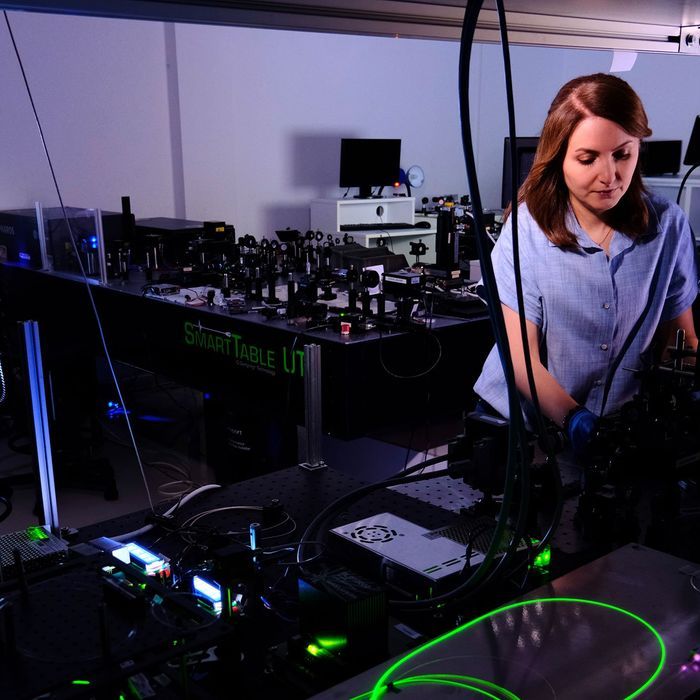
Featured image: illustrative electron-microscopy laboratory photograph, not the specific catalyst sample in the Nottingham study. Photograph by Oak Ridge National Laboratory, CC BY 2.0. Original image and licence.
Watching the same nanoparticles through a reaction
The research team set out to understand what happens to catalyst particles while they are working, rather than only examining them before and after a reaction. Conventional methods often average signals from very large numbers of particles. That can reveal the overall composition of a material but hide the different paths taken by individual particles. A catalyst may look similar in two snapshots even if the particles inside it have moved, merged, changed shape or formed new structures between measurements.
The Nottingham-led team used an approach described as identical-location electron microscopy. Instead of taking unrelated images at separate stages, researchers returned to the same locations and followed individual nanoparticles before activation, after hydrogen treatment and during carbon-dioxide hydrogenation. The method created a sequence of observations that the researchers describe as a time-lapse view of the catalyst’s evolution. It allowed them to see structural changes that would be difficult to infer from a single image or an averaged measurement.
The study involved researchers from the University of Nottingham and Cardiff University, alongside collaborators in the United Kingdom. The results were published in ACS Nano under the title “Formation of Dynamic Nanoporous Shells on Bimetallic Particles During Carbon Dioxide Hydrogenation.” The University of Nottingham described the work in a release on November 24, 2026. The journal paper is the primary scientific record; the university’s account provides additional explanation of the observations and their possible implications.
Particles moved, merged and changed during activation
One of the striking observations occurred before the main carbon-dioxide conversion reaction began. During catalyst activation, roughly half of the visible nanoparticles disappeared from the researchers’ field of view as neighbouring particles migrated and merged. Other particles grew by taking up atoms released from nearby particles. The researchers also observed changes in the particles’ ordering and crystallinity as the material developed the structures needed for catalysis.
These changes matter because catalyst performance depends on the arrangement of atoms at the surface and at the interface between a metal and its support. A particle that becomes larger may have a different surface area relative to its volume. A particle that moves or merges with a neighbour may expose different sites to reacting molecules. The activity of a catalyst therefore cannot always be understood by measuring only the amount of metal present. How the metal is organised and how that organisation changes under operating conditions can be just as important.
The result also helps explain why a catalyst’s behaviour in a laboratory preparation stage may differ from its behaviour after it has been placed under a real reaction environment. Activation is not simply a switch that turns a fixed material on. It can be a period of structural rearrangement. By observing the same particles over time, the researchers were able to connect those changes to the conditions applied at each stage rather than treating the final image as a complete explanation.
A moving oxide shell forms around the metal particles
The most unusual feature reported by the team was the behaviour of the zinc oxide support. During carbon-dioxide hydrogenation, the support material began to creep over the metal nanoparticles and form atomically thin shells. Those shells did not seal the particles inside a rigid coating. Instead, they developed tiny openings that changed position during the reaction. The openings were reported to be smaller than one nanometre, a scale at which a few atoms can determine whether a molecule can reach a reactive surface.
The researchers describe the shell as performing two jobs at once. It helps stabilise the particles and reduces the chance that they will continue to move and collide, while still allowing reacting molecules to reach the metal-support interface. The small openings also provide pathways for products to leave. The structure is therefore not a simple protective layer. It is a dynamic interface that can preserve access to the catalyst while limiting some forms of particle growth and coalescence.
That balance is important in heterogeneous catalysis, where a solid catalyst helps a reaction take place in a gas or liquid. The surface must remain accessible to the reactants, but the material also needs to resist changes that reduce its useful surface area or alter its active sites. A coating that is too dense can block the reaction. A coating that is too loose may fail to protect the particles. The observed nanoporous shell suggests one way a catalyst support could manage both requirements, although further testing is needed to determine how robust the effect is across different operating conditions.
Why carbon dioxide-to-methanol chemistry attracts interest
Methanol is an important industrial chemical. It is used as a feedstock for formaldehyde, acetic acid, plastics and a range of other products. It can also be used in some fuel applications and as a carrier for chemical energy. Producing methanol from captured carbon dioxide and hydrogen is therefore attractive because it could turn a greenhouse gas into a useful industrial input. The reaction is not automatically climate-neutral: its overall emissions depend on where the hydrogen comes from, how the carbon dioxide is captured, the energy used to run the process and what happens to the methanol after it is made.
Hydrogen produced using renewable electricity can reduce the emissions associated with the process, while hydrogen made from unabated fossil fuels can undermine the climate benefit. Carbon dioxide captured from a fossil-fuel plant also has a different climate profile from carbon drawn directly from the air or from a biogenic source. A complete assessment must account for the entire chain, not just the chemical reaction inside a reactor. The Nottingham study focuses on the catalyst’s structure under reaction conditions; it does not provide a full lifecycle assessment of a commercial methanol plant.
Even with those caveats, better catalysts could help improve the efficiency and durability of carbon-dioxide conversion. Catalysts that maintain active interfaces for longer may reduce the frequency of replacement and help keep a process operating at stable performance. If a catalyst can achieve the same output with less material, lower temperature or lower pressure, it may also reduce energy and capital costs. Those are potential engineering benefits that require further measurement, not outcomes already established by this study.
Identical-location microscopy changes what researchers can ask
The method is important beyond this one reaction. Many materials change while they are being used: battery electrodes expand and contract, catalysts restructure, nanoparticles sinter, and protective layers form or break down. When researchers compare a sample before and after use, they may see that a change occurred but not know the sequence that produced it. Following the same particles at multiple stages can help separate movement, growth, dissolution and reconstruction.
There are practical challenges. Electron microscopy must be configured so that the sample can be observed under conditions relevant to the reaction. The environment inside an instrument may differ from a large industrial reactor, and the beam itself can affect sensitive materials if measurements are not carefully controlled. A small field of view also means that researchers must be cautious about generalising from a limited number of particles. The value of identical-location microscopy is that it adds a new kind of evidence, not that it removes the need for complementary measurements.
The work also shows why a catalyst should be treated as a system rather than a metal particle in isolation. The support, the gas atmosphere, the temperature, the preparation process and the reaction history can all affect the active structure. The dynamic oxide shell described by the team emerges from interactions between the metal and the zinc oxide support. Designing catalysts may therefore require controlling the interface as carefully as the composition of the metal itself.
What the study does not yet prove
The announcement should not be read as evidence that carbon dioxide can now be converted into methanol cheaply at industrial scale. The study reports nanoscale observations and a possible design principle for more stable catalysts. It does not establish the cost of a reactor, the lifetime of a commercial catalyst bed, the amount of carbon dioxide that can be processed per hour or the net emissions of a complete facility. Those questions require engineering trials, scale-up work and independent lifecycle analysis.
Nor does the finding mean that all catalysts will spontaneously build the same kind of shell. The observations relate to the specific bimetallic particles and zinc oxide support examined in this research. Other catalyst systems may behave differently. The team’s broader suggestion is that dynamic, self-assembled interfaces could inspire new designs, not that one structure is a universal solution for every chemical process.
There is also a distinction between seeing a mechanism and proving that it improves performance under every relevant condition. The researchers observed shells with openings that moved during the reaction and argued that this arrangement can stabilise particles while preserving access for molecules. Further work will need to measure how the structure behaves over long periods, how it responds to contaminants and cycling, and whether it can be reproduced consistently during manufacturing.
Why the next stage is engineering, not hype
The immediate value of the research is a clearer picture of what happens at the catalyst surface. That knowledge can guide experiments that deliberately alter the support, metal composition and reaction conditions. Engineers can test whether similar shells form in other systems, whether their openings can be tuned and whether the resulting catalysts remain active after repeated cycles. The next useful milestones will be reproducible performance measurements, longer-duration testing and comparisons with established catalyst formulations.
For climate and industrial policy, the work is a reminder that carbon utilisation depends on more than a headline conversion reaction. Captured carbon dioxide must be available at the right purity and cost. Hydrogen must be produced with low emissions. The process needs reliable energy, a market for the methanol and a credible way to account for carbon flows. Better catalysts can improve one part of that chain, but they cannot solve the whole system alone.
The broader scientific lesson is still significant. By following individual nanoparticles instead of relying only on averaged snapshots, the researchers have shown that a catalyst can reorganise itself while it works. The finding opens a more detailed way to study materials under operating conditions and may help researchers design catalysts that are both active and durable. Whether that becomes a practical advantage for industrial methanol production will depend on the next round of experiments and scale-up tests.
Frequently asked questions
What did the electron microscopy study discover?
The researchers followed individual catalyst nanoparticles during carbon-dioxide hydrogenation and observed them moving, merging and changing structure. They also saw zinc oxide form thin shells with dynamic openings smaller than one nanometre around metal particles.
Does the discovery mean carbon dioxide can now be turned into methanol at industrial scale?
No. The study provides nanoscale evidence and a possible design principle. It does not establish the cost, lifetime, throughput or full lifecycle emissions of a commercial plant.
Why are the tiny openings in the oxide shells important?
The openings may allow reactant molecules to reach the catalyst while the shell helps stabilise the particles. Their movement suggests that protection and access can coexist, although longer-term performance still needs to be tested.