A blood test that searches for traces of cancer-related DNA faces a basic challenge: the tumour-derived fragments can be a small part of the genetic material circulating in a person’s bloodstream. A study involving 1,480 participants recruited through 43 hospitals in India has reported a result that complicates that assumption. Researchers found that higher levels of circulating cell-free DNA were associated with stronger cancer-related DNA methylation signals, even after accounting for cancer type and stage. The finding could inform future multi-cancer detection tests, but it does not mean a routine blood test can diagnose cancer today.
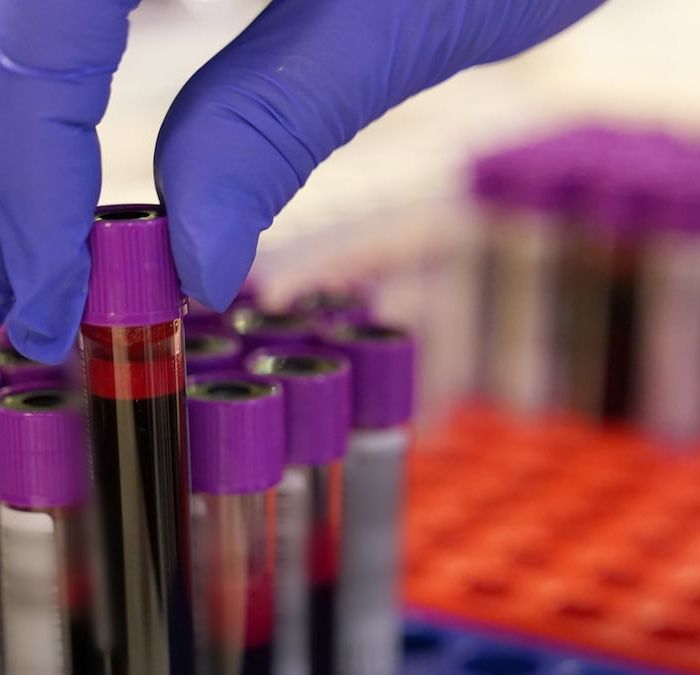
Featured image credit: Julia Koblitz / Unsplash. Image is illustrative and does not depict the specific event, experiment or study unless stated otherwise.
What cell-free DNA is
Cell-free DNA refers to short fragments of genetic material that circulate outside cells, including in blood plasma. These fragments can be released when cells die or shed material into the bloodstream. In healthy people, much of the circulating DNA comes from normal tissues and immune cells. In people with cancer, some fragments may originate from tumour cells and carry molecular patterns associated with the disease. Those patterns can include DNA methylation changes, which influence how genes are regulated without changing the underlying DNA sequence.
Blood-based cancer tests attempt to detect these tumour-associated signals in a sample that also contains DNA from many non-cancerous cells. The challenge is similar to finding a small signal in a noisy mixture. If the amount of background DNA rises, researchers might expect the tumour-derived fraction to become more diluted. The new study reports a more complicated relationship: higher total cell-free DNA was associated with stronger cancer-associated methylation signals, rather than simply obscuring them.
What the Indian study examined
The study included 1,480 previously untreated participants recruited through 43 hospitals in India. The groups included patients with 14 cancer types across different stages, people with benign growths and healthy volunteers. Researchers examined circulating cell-free DNA and cancer-associated DNA methylation patterns. The results were published in the Proceedings of the National Academy of Sciences and described a relationship between total cell-free DNA levels and the strength of cancer-related molecular signals.
The authors reported that total circulating cell-free DNA explained more variation in the cancer-associated methylation signal than disease stage alone. The association remained after adjustment for cancer type, stage and a broad panel of demographic, clinical and technical factors. This is a potentially important biological observation, but it should be read in the context of the study design. It does not by itself establish the sensitivity, specificity or clinical usefulness of a commercial screening test.
Why the finding challenges an earlier assumption
Researchers have often expected that extra DNA released by healthy or immune cells would dilute the small amount of tumour-derived DNA in a blood sample. If that were always true, higher total cell-free DNA might make it harder to identify a cancer-specific signal. The new study found the opposite pattern in its participant groups: as total cell-free DNA increased, the measured methylation signal associated with cancer also became stronger.
One possible explanation is that immune-cell activity and tumour-associated molecular changes are linked in ways that influence the mixture of DNA fragments in circulation. The study suggests a coupling between cell-free DNA abundance and cancer-associated methylation signatures. That does not mean the immune system is necessarily causing cancer or that a higher cell-free DNA level is itself a cancer diagnosis. The relationship needs further investigation to understand the biological mechanisms and determine how it performs in people who have not yet been diagnosed.
What DNA methylation can reveal
DNA methylation involves chemical marks attached to DNA that can influence whether particular genes are active or quiet. Cancer cells often show abnormal methylation patterns compared with healthy tissue. Some of these patterns are associated with particular tumour types or tissues of origin. Because fragments of tumour DNA can enter the bloodstream, researchers can sometimes detect cancer-related methylation signatures through a blood sample, a field often described as liquid biopsy or circulating tumour DNA analysis.
Different liquid-biopsy approaches look for different signals. Some search for mutations, others examine methylation, fragment length or combinations of molecular features. A multi-cancer early-detection test may attempt to identify a cancer signal and infer where it originated. Such tests are technically demanding because cancers vary in how much DNA they shed, and early-stage tumours may release very small amounts. A promising molecular signal is only one part of the pathway from laboratory research to a reliable screening programme.
Why this is not yet a routine screening test
A screening test must work in people who do not have symptoms and whose disease status is not already known. It must detect enough cancers at a useful stage while avoiding excessive false positives, unnecessary investigations and missed diagnoses. A study that includes known cancer cases and healthy volunteers can reveal biological associations, but it does not automatically establish how the test performs in a real screening population. The prevalence of cancer, age distribution and other risk factors can substantially affect the positive predictive value.
Before a blood-based multi-cancer test becomes routine, researchers need large prospective studies in intended-use populations, independent validation and evidence that testing improves meaningful outcomes. They must determine how often the test produces false alarms, whether it detects cancers that would otherwise become clinically important and whether follow-up procedures create harms. A test that detects a molecular signal is not necessarily a test that saves lives. Clinical benefit requires evidence about the entire screening and treatment pathway.
The importance of a multi-centre Indian cohort
Recruitment across 43 hospitals gives the study a broad clinical footprint and includes participants from multiple care settings. India has a diverse population and a substantial burden of cancer, making locally generated evidence important for developing diagnostic approaches that are relevant to the country’s healthcare system. Multi-centre recruitment can also expose a test to variation in sample handling, patient characteristics and clinical practice that may not be visible in a single specialist institution.
At the same time, a hospital-based cohort is not the same as a representative population screening sample. People attending hospitals may differ from people who have no symptoms or who have limited access to care. Further research will need to examine performance across regions, age groups, socioeconomic conditions and cancer types. The test must also be evaluated in settings where laboratory infrastructure and follow-up imaging or biopsy services vary. Accessibility and affordability will be as important as analytical accuracy.
Potential benefits and risks of earlier detection
Earlier cancer detection can improve treatment options for some cancers, especially when a disease is found before it spreads. A blood test that identifies multiple cancer signals could potentially reduce dependence on separate screening pathways, but it also raises difficult questions. Some cancers have established screening methods, while others do not. A multi-cancer test may detect tumours for which there is no proven screening benefit, or it may identify signals that are difficult to locate and investigate.
False-positive results can lead to anxiety, repeat blood tests, scans, invasive procedures and financial costs. False-negative results may provide false reassurance and delay care when symptoms develop. There is also a risk of overdiagnosis, where a test detects a slow-growing cancer that would not have caused harm during a person’s lifetime. These concerns do not make the research unimportant; they show why screening requires careful evaluation and clear communication about what a result can and cannot tell a patient.
What comes next for the research
The next steps include independent replication, deeper study of the biological link between total cell-free DNA and methylation signals, and prospective validation in populations representative of intended screening users. Researchers will need to determine how the assay performs across cancer types and stages, how it compares with existing screening approaches and whether it can reliably identify a likely tissue of origin. It will also be important to assess how sample collection, processing and storage affect the results.
For now, the study adds a useful insight to the science of liquid biopsy: more circulating DNA does not necessarily mean a weaker cancer signal. The finding could help researchers refine multi-cancer detection strategies, but it is not a reason to seek unvalidated commercial testing or to replace established screening. People should continue recommended screening based on age and risk, and discuss symptoms or concerns with a healthcare professional rather than relying on experimental blood tests.
Frequently asked questions
Can a blood test detect multiple cancers early?
Researchers are developing multi-cancer blood tests that look for tumour-associated signals such as DNA methylation. The study described here is a research finding, not proof that a routine multi-cancer screening test is ready for general use.
Does higher cell-free DNA mean someone has cancer?
No. Cell-free DNA comes from many normal and abnormal processes. A higher level alone cannot diagnose cancer. The study examined associations between DNA abundance and cancer-related methylation patterns in a defined cohort.
Should people replace regular cancer screening with a blood test?
No. People should continue recommended screening and seek medical advice for symptoms. Experimental or commercial blood tests should not replace validated screening programmes without evidence and clinician guidance.
Sources and further reading
- Proceedings of the National Academy of Sciences: Rising cell-free DNA level tracks cancer-associated methylation signal and improves multicancer detection
- Medindia, 20 November 2026: More DNA in Blood Could Help Detect Cancer Earlier
- US National Cancer Institute: Multi-cancer detection tests and research