The Bundibugyo virus outbreak in the Democratic Republic of the Congo remains a public health emergency six months after it was declared. The World Health Organization reported 11,613 confirmed cases and 5,678 deaths as of 17 November, with transmission still active in 48 health zones. Community deaths, insecurity and delayed access to care are undermining the response, even as laboratory capacity, treatment beds and clinical research have expanded.
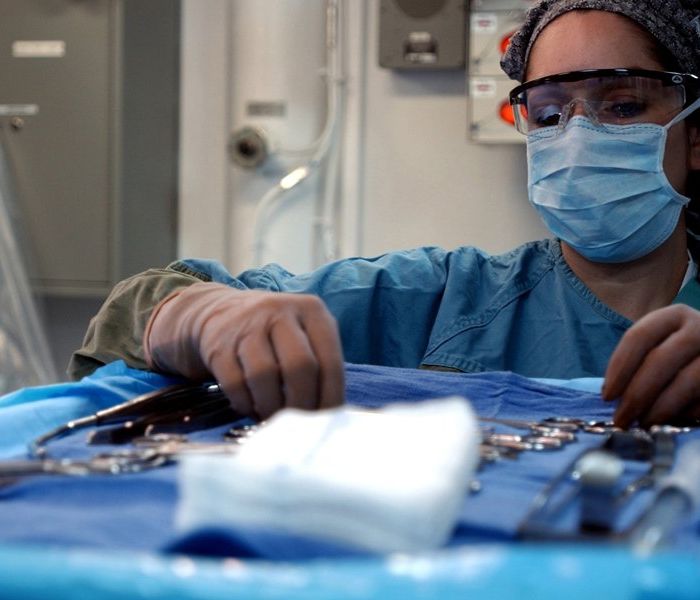
Featured image: Simon Davis/DFID, CC BY 2.0. Archival Ebola preparedness training in 2014, not a photograph of the current outbreak. Original photograph · Licence. Cropped to 1000 × 600.
A six-month outbreak with a rising confirmed toll
The latest figures show why the outbreak remains difficult to contain. In its 20 November Disease Outbreak News update, the World Health Organization reported 11,613 confirmed Bundibugyo virus disease cases and 5,678 confirmed deaths in the Democratic Republic of the Congo as of 17 November. The cases were recorded across 68 health zones in eight provinces, with active transmission reported in 48 zones. The cumulative crude case fatality ratio was 48.9 per cent, and 3,148 people had been reported as recovered. These figures describe confirmed cases in a fast-moving emergency, not every infection that may have occurred.
The outbreak was declared on 15 May 2026. The WHO update records an additional 945 confirmed cases and 480 confirmed deaths in the DRC since its previous bulletin on 6 November. In the 21 days ending 17 November, 1,417 new confirmed cases were reported. The largest recent totals were in Ituri and North Kivu, the provinces that have carried much of the response burden. The increase is not uniform across the country, but the overall pattern remains one of sustained, high-level transmission rather than a contained cluster.
The 48.9 per cent crude case fatality ratio should be read carefully. It is a ratio of reported deaths to reported confirmed cases at a particular point in an outbreak. It is not a prediction of an individual patient’s outcome, and it can change as cases are identified earlier, treatment access improves and the outcomes of people still receiving care become known. The figure does, however, underline the urgency of rapid diagnosis, supportive care and access to treatment facilities.
Where transmission is continuing
Ituri remains the most extensively affected province. WHO reported cases in 28 of its 36 health zones during the outbreak, while North Kivu had reported cases in 17 of 34 zones. Haut-Uélé and Tshopo have also recorded transmission. Some areas have gone more than six weeks without a newly reported case, but that does not automatically mean the outbreak has ended there. Health teams must maintain surveillance long enough to detect infections that may have been missed or that emerge after a delay.
The geography matters because the outbreak is unfolding in a region where insecurity, displacement and difficult transport routes make consistent health coverage hard to maintain. A village may be close to a treatment centre on a map but separated from it by damaged roads, insecurity or a lack of transport. People may delay seeking care because they fear isolation, have had poor experiences with health services or cannot afford to leave family and work. Each delay makes it harder to isolate a case, identify contacts and protect health workers.
The wider regional picture is more contained, but it still requires attention. Since the outbreak began, cases have been reported in five countries: the DRC, France, Kenya, Nigeria and Uganda. WHO says the outbreaks in France and Uganda were controlled by August. Kenya reported nine confirmed cases, including two deaths, all linked to an imported case and its contacts. Nigeria reported one imported case. As of the 17 November cut-off, neither Kenya nor Nigeria had reported a new confirmed case since the previous WHO update, and both were in a 42-day monitoring period.
Why so many deaths are occurring outside treatment centres
One of the most troubling details in the WHO bulletin concerns where people are dying. Of 720 deaths reported in the DRC during the three weeks after 28 October, 452 occurred in communities rather than in Ebola treatment centres. The WHO Director-General told the Emergency Committee on 17 November that roughly two-thirds of confirmed deaths were still occurring outside treatment centres. That is a sign that too many people are being identified late, or are unable to reach care in time. It also points to gaps in contact follow-up and access to trusted local health services.
A high number of community deaths creates two connected problems. Families may lose the chance to receive timely clinical support, and people who cared for an infected relative may not be identified quickly enough for monitoring. Safe and dignified burial procedures are important because direct contact with the body of a person who died from Ebola can expose others. Those procedures must be delivered with sensitivity and respect. If families believe that health teams are arriving only to remove a loved one or impose unfamiliar rules, they may avoid reporting illness or deaths.
Community engagement is therefore not a public-relations extra. It is part of the outbreak response itself. Local leaders, community health workers, faith groups and survivors can help explain what symptoms require urgent attention, how care is provided and why contact tracing matters. Communication must also acknowledge what people are experiencing: insecurity, displacement, loss of income, interrupted schooling and the risk of losing family members. A message that ignores those realities is unlikely to build trust.
Children are bearing a disproportionate share of the burden
The WHO Director-General’s remarks on 17 November highlighted the severity among children. Children account for more than a quarter of confirmed cases and around one-third of reported deaths, according to the remarks. Seven in ten children under five with confirmed Bundibugyo virus disease had died by the time of the Emergency Committee meeting. These are stark figures, and they make early recognition and access to paediatric care particularly urgent.
The outbreak response must protect children without allowing other essential services to collapse. WHO has warned that Ebola control cannot come at the expense of primary health care, maternal and child health services or treatment for other diseases. In areas affected by displacement and insecurity, families may already struggle to reach routine vaccination, antenatal care, malaria diagnosis and treatment for common infections. If clinics close or staff are diverted for too long, the indirect effects of the outbreak can extend well beyond people infected with the virus.
A health system under pressure also needs to protect the people providing care. Staff require appropriate protective equipment, training, reliable transport, laboratory support and timely payment. The WHO Director-General said delayed payments to frontline health workers were creating tension and slowing the response. A workforce that is exhausted, unpaid or exposed to repeated attacks cannot sustain a complex response indefinitely.
Security and logistics are now central to outbreak control
Insecurity has become one of the most serious obstacles. WHO described attacks on health workers and facilities, including an incident in which civilians and health workers were killed and contacts were lost to follow-up. Such events can shut down surveillance, prevent teams from entering communities and interrupt the movement of samples and medical supplies. They also make families less willing to cooperate with teams they associate with dangerous or disruptive operations.
The response has expanded since May. WHO’s 17 November remarks said that the number of laboratories able to test for the virus had increased from two to more than two dozen, that close to 2,000 treatment beds were available and that about 3,000 people had recovered. Those gains matter, but capacity on paper is not the same as access in every affected district. A bed is useful only if a patient can reach it, a trained team is present and the facility has the equipment and supplies required to provide safe care.
The same applies to surveillance. More than 400 new cases a week were still being reported in the WHO Director-General’s remarks. When a large share of infections is not found through known contact lists, teams must widen community surveillance and improve the speed at which suspected cases are tested. That requires local reporting networks, reliable laboratories, clear referral routes and enough staff to follow contacts even when movement is restricted.
Vaccine and treatment research is advancing, but no shortcut exists
There is no vaccine or treatment licensed specifically for Bundibugyo virus disease. This distinction matters because vaccines and medicines developed for one Ebola virus species cannot automatically be assumed to protect against another. The Ervebo vaccine is licensed for Ebola virus disease caused by the Zaire ebolavirus species. WHO says a trial using Ervebo began during the current outbreak, while two candidate vaccines developed specifically for Bundibugyo virus were expected to be added to the trial in the coming weeks. The results will need careful assessment before any candidate can be considered effective.
Therapeutic research is also under way. WHO reported that clinical trials of treatments had enrolled more than 900 people by the time of the 17 November Emergency Committee meeting. Trial enrolment is a sign of research activity, not proof that a medicine works. Researchers must compare outcomes, monitor adverse effects and determine whether any benefit is large enough to change clinical practice. In the meantime, early diagnosis, supportive care, fluid and electrolyte management, treatment of complications and infection prevention remain central to patient care.
The distinction between research and established treatment is especially important when fear and misinformation spread quickly. Families should not be led to believe that an experimental vaccine or medicine is already a proven cure. Public health authorities need to explain what is being tested, who is eligible for a trial, what is known about safety and when results may become available.
Why WHO has maintained the international emergency designation
On 18 November, the WHO Director-General determined that the outbreak continued to constitute a Public Health Emergency of International Concern, following advice from the International Health Regulations Emergency Committee at its meeting on 17 November. The decision reflects the scale of transmission in the DRC, the continuing risk to neighbouring countries and the need for coordinated international support. It does not mean that every country faces the same level of risk or that routine travel should stop.
WHO has urged countries not to impose blanket travel or trade restrictions. The organisation’s position is that targeted, evidence-based measures are more useful than broad restrictions that can damage livelihoods and discourage countries from reporting cases quickly. Appropriate steps include surveillance at points of entry, timely detection of people who may be ill, clear referral procedures and cooperation between neighbouring health authorities. These measures need to be proportionate to the actual risk and consistent with international health regulations.
The European Centre for Disease Prevention and Control’s 16 November assessment also described ongoing community transmission in the DRC while noting that the imported cases in Kenya and Nigeria remained linked to known chains. The assessment is a reminder that regional preparedness must be sustained even when a country has not reported a new case for several weeks. Cross-border movement, medical evacuation and family travel can connect distant health systems, so information sharing and laboratory capacity remain important.
The next phase depends on trust, access and sustained funding
The next phase cannot be measured only by the number of treatment beds or vaccines in development. It will depend on whether people can reach care before their illness becomes severe, whether contacts can be followed safely, whether frontline staff are protected and paid, and whether the response can continue in areas affected by insecurity. Funding must reach the districts where the outbreak is active, not remain only in national plans or international pledges. Independent reporting has described gaps between the resources promised and the support available to teams working in hotspots.
The DRC’s neighbours also need support to keep surveillance and emergency readiness in place without disrupting ordinary life. Kenya and Nigeria can complete their monitoring periods only if they continue to investigate alerts and maintain clear reporting. Other countries need trained staff, reliable testing and a plan for medical evacuation or isolation if an imported case is detected. That preparation is not a reason for alarm; it is a practical way to reduce the consequences of an unexpected case.
Bundibugyo virus disease is a rare but serious Ebola disease. The current outbreak has already shown how quickly a health emergency can become harder to control when violence, displacement, mistrust and fragile health services intersect. The WHO figures released on 20 November show that transmission remains widespread, but they also document progress in laboratories, treatment capacity and research. The decisive test now is whether those gains can reach communities consistently enough to reduce late presentation, prevent avoidable deaths and interrupt transmission.
Watch: The World Health Organization’s earlier briefing on the Bundibugyo virus outbreak in the DRC provides background on the response. It was published in May 2026 and is not a recording of the latest November update.
Frequently asked questions
Is the Bundibugyo Ebola outbreak still a public health emergency?
Yes. On 18 November 2026, the WHO Director-General determined that the outbreak continued to constitute a Public Health Emergency of International Concern, following advice from the International Health Regulations Emergency Committee.
Is there an approved vaccine for Bundibugyo virus disease?
No vaccine is licensed specifically for Bundibugyo virus disease. WHO says a trial using Ervebo, which is licensed for Zaire ebolavirus, began during the outbreak, and two candidate vaccines developed specifically for Bundibugyo virus were expected to join the trial.
Are the cases in Kenya and Nigeria still increasing?
In its 20 November update, WHO said neither country had reported a new confirmed case since the previous bulletin. Both were in a 42-day monitoring period, but surveillance and regional preparedness remained necessary.
Sources and further reading
- World Health Organization, Disease Outbreak News: Bundibugyo virus disease in the DRC, Kenya and Nigeria (20 November 2026).
- WHO Director-General’s opening remarks at the third IHR Emergency Committee meeting (17 November 2026).
- European Centre for Disease Prevention and Control: Bundibugyo virus disease outbreak assessment (16 November 2026).
- Reuters: Africa CDC says Ebola outbreak remains out of control six months after declaration (15 November 2026).
- The Guardian: Reporting from communities affected by the Bundibugyo outbreak (20 November 2026).