The United States is preparing to release findings from a manufacturing investigation covering 16 trading partners, including India, China and the European Union, Reuters reported on November 24. The findings could lead to tariffs under Section 301 of the Trade Act. Washington opened the investigations in March, but the latest reporting did not establish what products would face duties, how high the rates would be or when they would take effect.
What Washington is preparing to announce
Reuters reported, citing people familiar with the matter, that the administration was preparing to release the results of its investigations and unveil new tariffs. The Financial Times separately reported that Washington was preparing duties after examining industrial subsidies and excess capacity. These reports suggest the March investigations may soon move to a decision. Neither report substitutes for a published US determination that importers and foreign governments can read and act on.
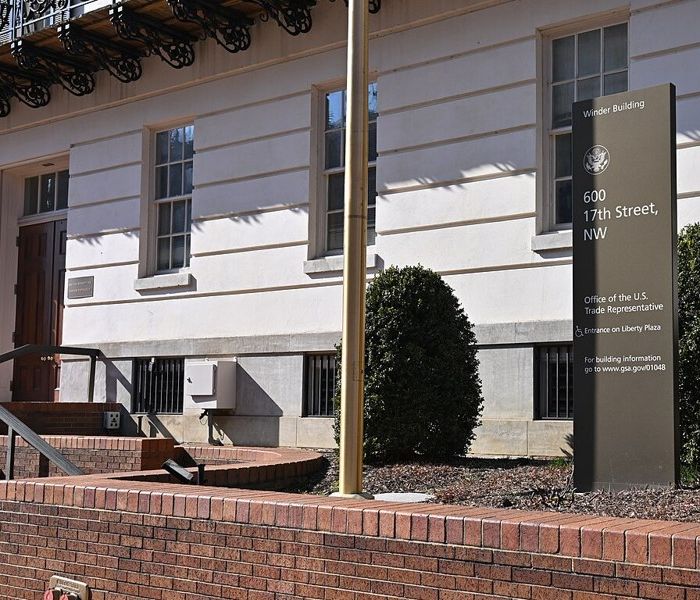
The Office of the United States Trade Representative opened the investigations on March 11. Its formal notices identified China, the European Union, Singapore, Switzerland, Norway, Indonesia, Malaysia, Cambodia, Thailand, South Korea, Vietnam, Taiwan, Bangladesh, Mexico, Japan and India. The list brings together close US security partners, manufacturing competitors and economies that supply intermediate goods to one another. Inclusion identifies the governments and practices under review. It does not indicate which countries will face similar findings or what response Washington will choose in each case.
What the US means by excess manufacturing capacity
The US trade representative described the investigations as an examination of government practices that could sustain production beyond what normal demand and investment would support. It pointed to possible factors such as subsidised credit, barriers to imports and support for production or exports. It also listed indicators such as persistent trade surpluses or unused manufacturing capacity. Those indicators may start an inquiry, but they do not establish why an industry expanded or whether a specific government measure held production at that level.
Spare factory capacity can arise for several reasons. An investment made while sales were rising can leave an industry with underused plants if demand later slows. Firms may also decide to accept low utilisation temporarily because closing and rebuilding capacity is costly. A government subsidy can change that calculation by reducing the cost of keeping a facility open. Identifying which explanation fits requires evidence about the sector, the policy and the alternatives available to producers.
Reuters reported that Washington has singled out China as a major source of the capacity it is investigating. China rejects the accusation that its exports reflect unfair overproduction and attributes them to competitive advantages. The disagreement matters because the same export growth can be described by governments in very different ways. The published reasoning, whenever it appears, will help show which practices the US considers objectionable and what evidence it used to distinguish them from other explanations.
Why India’s position deserves a separate reading
India is listed in the March initiation notice. It was also among the governments identified in October by the US trade representative as joining a ministerial statement on global excess capacity. The statement was a separate diplomatic initiative involving a group whose membership overlaps only in part with the March investigations. India’s presence in both shows that it can take part in discussions about the international problem while its own policies remain within the scope of a US review.
That distinction matters for assessing New Delhi’s options. A broadly worded statement about global production does not set a US tariff on Indian goods, and membership in a group discussion does not settle the questions in a domestic trade investigation. India’s response would depend on the official finding, the industries covered and the proposed terms. A joint statement could provide a forum for discussing production and subsidy policies even if bilateral talks are needed to address a specific US measure.
For an Indian exporter, the practical issue is whether the US applies a duty to that exporter’s product and how it defines the goods in scope. Firms in different industries may face very different effects even if their factories operate in the same country. An effective date and the treatment of goods already shipped can also matter to orders placed under existing contracts. Those operational details cannot be inferred from a report that an announcement is imminent.
The March notice invited public comments and announced hearings beginning in May. That sequence gave interested parties a chance to provide information before the trade representative reached a decision. A published finding can reveal which evidence the agency relied on and how it treated objections. For trading partners and businesses, those reasons matter alongside any proposed rate because they help identify which policies or products Washington considers central to the dispute.
Why differences between trading partners matter
Reuters reported that some countries could see different treatment because of trade arrangements already in place. It cited a person familiar with the plans who expected Washington to honour certain caps agreed with partners, including the European Union, Japan and South Korea. Those expectations remain attributed reporting. An official notice would need to establish the interaction between any new measure and duties already applying to the same goods.
The inquiry also reaches economies that are closely linked through manufacturing supply chains. A component can be made in one country, incorporated into a larger item in another and imported into the United States from a third. Under any new measure, importers will need to understand which product classifications and origin rules apply. The impact can extend to suppliers that never directly ship to the United States, because a levy can affect the ability of their customers to compete there or change the locations from which those customers source parts.
For governments responding to the investigation, the choice of industry matters as much as the choice of country. A dispute over products from a specific sector could leave room to negotiate changes to an individual subsidy, credit programme or market-access rule. A broader measure could instead put more of the bilateral trade relationship at issue. The opening documents cover multiple manufacturing sectors, and the November reporting leaves the product lists unresolved. It is therefore premature to infer that a reported measure affecting one partner would have the same scope as a measure affecting another.
What makes the official document more important than the headline rate
A tariff proposal can move quickly into political debate, but companies need an applicable rule before they can estimate costs. A useful notice would identify which product classifications are affected, whether the measure varies by country and how it interacts with existing duties. If Washington proposes exclusions, the notice would need to explain whether they apply automatically or require a separate process. Differences in those provisions can change the result even where two partners appear to face a similar rate.
The next evidence to watch is the release of the US trade representative’s determinations and any proposed remedies, followed by public responses from governments whose practices are named. The findings would show which policies Washington considers a problem. A proposal would show the response it is considering. An implementation notice would give importers the rules they need to follow. Separating those steps also helps distinguish diplomatic statements from measures that will change what companies pay at the border.
The geopolitical question is how partners balance cooperation on global manufacturing policy with the defence of their exporters. Washington’s October convening suggests that common ground exists on some parts of the problem. The reach of that agreement will become clearer once the US specifies its findings and the affected partners have a concrete text on which to respond.
Frequently asked questions
Is India included in the US excess-capacity investigation?
Yes. The US trade representative named India among the 16 economies included when the investigations opened in March 2026.
Have new tariff rates been confirmed?
The November 24 Reuters report described preparations for an announcement. It did not establish final rates, covered goods or effective dates.
Why does the written determination matter?
It can identify the practices at issue, while a subsequent or accompanying notice can specify remedies and explain how any duties apply.