The contest to choose the next United Nations Secretary-General has entered a more difficult phase after a new Security Council straw poll showed strong support for Rebeca Grynspan alongside reported opposition from permanent members. The informal ballot is not a formal veto or an election result, but it reveals the central difficulty of the process: a candidate needs broad Council support and must avoid a blocking confrontation with any of the five permanent powers.
A leading candidate with a complicated ballot
Rebeca Grynspan has emerged as one of the most visible contenders to succeed António Guterres when his second term ends on 31 December 2026. The former vice-president of Costa Rica now leads the UN Conference on Trade and Development, giving her a profile that combines national political experience with a senior international role. Her campaign has emphasised multilateral cooperation, economic development and the need to restore confidence in institutions that are increasingly pulled between competing geopolitical blocs.
The ninth informal Security Council straw poll, reported on 20 November, left the contest unresolved. The Guardian reported that Grynspan remained the frontrunner with ten encouraging votes, enough to reach the numerical threshold for a formal recommendation, but she still faced two discouraging votes from permanent members. The Council does not publish individual ballots, so the tally comes from diplomatic reporting rather than an official public roll-call. The important point is that a candidate can attract broad support and still face a blocking obstacle if any permanent member is prepared to use its veto.
How the Security Council straw poll works
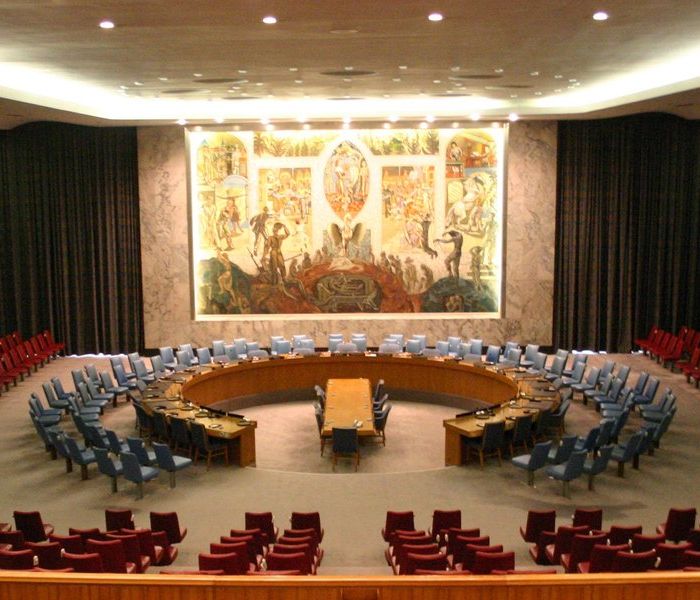
The Secretary-General is not chosen through a global popular vote. Under the UN Charter, the Security Council recommends a candidate and the General Assembly appoints that person. The Council has fifteen members: China, France, Russia, the United Kingdom and the United States hold permanent seats, while ten other states serve elected terms. A formal recommendation needs at least nine affirmative votes and cannot pass if one of the five permanent members casts a veto.
Before a formal vote, Council members often use informal straw polls to test support. In this process, each member can indicate whether it encourages, discourages or has no opinion about a candidate. The system allows diplomats to signal reservations without immediately forcing a public confrontation. It is a useful gauge, but it is not a legal decision. A candidate can continue after receiving discouraging votes, and governments can change their position as negotiations proceed. The poll is therefore best understood as a snapshot of political preferences rather than a final verdict.
Why the P5 problem matters
The five permanent members have different strategic priorities, and each has the ability to block a recommendation. Their views are not always aligned on the role of the UN, the handling of conflicts or the balance between national sovereignty and international action. A candidate who is popular among elected members may still struggle if a permanent power believes that person’s priorities would challenge its interests. That makes the selection process a negotiation among states with unequal voting power, not simply a competition between individuals.
The discouraging signals reported in the latest poll should not be described as formal vetoes. The straw poll is informal, and the permanent members do not have to explain their choices publicly. Still, a pattern of negative signals from two P5 governments is politically significant because it suggests that Grynspan would need to address concerns or persuade those governments to soften their positions. A candidate who cannot secure at least tacit acceptance from the permanent members is unlikely to reach a successful formal recommendation.
The field is broader than one candidate
Grynspan is not the only person in the race. Other prominent contenders include Rafael Grossi, who leads the International Atomic Energy Agency, and Lana Nusseibeh, the Emirati diplomat who entered the contest later. The wider field includes candidates from Latin America, Africa and other regions, and the lineup has changed as nominations have been added or withdrawn. The process is still fluid, so any list of contenders should be treated as a snapshot rather than a final shortlist. The latest straw poll does not settle the contest.
The candidates face a difficult balance. They need to explain what they would change at the UN while reassuring governments that they will not use the office to advance one bloc’s priorities. The Secretary-General has a mandate to speak on behalf of the organisation, but the office depends on member states for money, political backing and cooperation. A candidate who promises too much independence may alarm powerful governments; one who promises too little may struggle to persuade smaller states that the organisation can act with credibility.
Regional balance and the question of representation
The selection also takes place amid wider expectations about geography and gender. There has been a long-running argument that the next Secretary-General should be a woman, and several governments have said that regional balance should matter. Those expectations can influence political calculations, but they are not binding rules in the Charter. The Security Council and General Assembly retain the formal authority to recommend and appoint a candidate. The process can therefore reflect diplomatic convention without being legally constrained by a strict rotation formula.
Grynspan’s Latin American background is relevant to that debate, but it does not guarantee support from the region or from the wider membership. Governments may prioritise experience, language, political relationships, reform plans or the ability to manage crises. The candidate’s nationality can become a factor in the negotiation, but the office is intended to represent the whole organisation. A credible selection would need to persuade states that the next Secretary-General can work across regions and not merely reflect the preferences of the governments that secured the appointment.
What the next Secretary-General will inherit
The incoming chief will take office at a moment when the UN faces simultaneous pressure on peace and security, humanitarian access, climate action, development finance and public trust. The Security Council has struggled to act consistently when the interests of permanent members collide. Humanitarian agencies face funding gaps while conflicts displace millions of people. Many developing countries argue that the international financial system does not respond quickly enough to debt and climate shocks. The next Secretary-General will inherit these structural problems rather than a blank slate.
The office has influence, but not independent power to impose settlements. The Secretary-General can use the UN’s convening role, offer good offices, appoint envoys and draw attention to threats to international peace. The role also involves managing a large international civil service and coordinating agencies that work in difficult political environments. Success depends on judgment, credibility and the ability to build coalitions. A candidate’s campaign statements will matter less than whether governments believe that person can maintain access to capitals that disagree with one another.
Why the selection process can become a test of UN legitimacy
The way the next chief is chosen will shape perceptions of the organisation before the new Secretary-General has delivered a single initiative. If the process appears to be decided in a closed negotiation among the most powerful states, smaller members may question whether the UN reflects the wider membership. If the Council cannot agree, the delay could create uncertainty at a time when continuity is important. The formal role of the General Assembly is also significant because it represents all 193 member states, even though the Council controls the recommendation stage.
There is no simple solution to the imbalance built into the Charter. The veto was designed to keep the major powers inside the system after the Second World War, but it can also prevent action when those powers disagree. The Secretary-General selection process exposes that tension directly. The Council needs to choose someone who can command broad confidence, yet the candidate must also be acceptable to governments whose interests often conflict. The informal polls provide a way to test that balance, but they cannot remove the underlying political problem.
What happens next
The next phase is likely to involve further consultations among Council members and discussions with the candidates. Governments may seek assurances on priorities such as peacekeeping, financial management, human rights, development and the role of the Secretary-General in public diplomacy. The Council will eventually need to move from informal polling to a formal recommendation. The General Assembly then appoints the candidate. The timetable is tight because the new term is due to begin on 1 January 2027, but the Council can continue negotiations until it finds a candidate who can secure the necessary support.
Grynspan’s position remains viable, but the latest poll shows that a strong tally is not enough by itself. The most important question is whether the discouraging signals from permanent members can be addressed without losing the support she has already attracted. The process may still produce a consensus candidate, but it may also require a compromise that changes the field. The next Secretary-General will need more than a successful vote. The person will need enough political space to speak for the UN while working with governments that do not agree on the organisation’s priorities.
United Nations video: Rebeca Grynspan’s media stakeout as a Secretary-General candidate
Official UN footage from 22 April 2026, following Grynspan’s interactive dialogue. It is candidate background, not footage of the 20 November straw poll.
Frequently asked questions
Does the latest straw poll mean Grynspan has been vetoed?
No. The straw poll is informal and its discourage signals are not formal vetoes. It indicates political opposition that could become important in a later Security Council vote.
How is the next UN Secretary-General selected?
The Security Council recommends one candidate, and the General Assembly appoints that person. A formal recommendation requires at least nine affirmative Council votes and no veto from a permanent member.
When does the next Secretary-General take office?
The new five-year term is due to begin on 1 January 2027, after António Guterres completes his second term at the end of December 2026.
Sources and image credits
- The Guardian: UK and France believed to have vetoed the UAE choice, 20 November 2026
- The Guardian: Race to be next UN Secretary-General exposes divisions among world powers
- United Nations: Selection process for the 2027 Secretary-General
- UN Trade and Development: Secretary-General Rebeca Grynspan
- Featured image: James D. Forrester, 6 September 2024, Wikimedia Commons, licensed under CC BY 4.0.