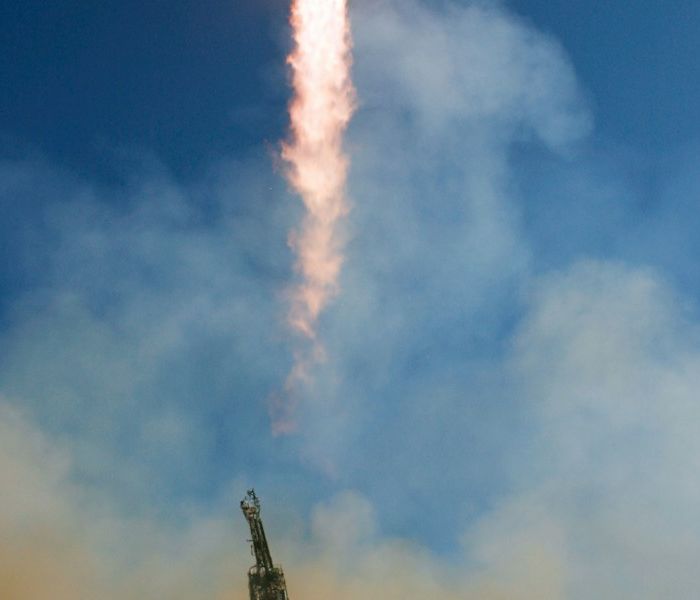
India’s Polar Satellite Launch Vehicle is undergoing a careful return-to-confidence programme after two anomalies involving its third stage. On November 12, 2026, the Indian Space Research Organisation completed a ground static test of a revised PS3 solid motor at the Static Test Facility in Sriharikota. ISRO says the redesign includes changes to the nozzle, mechanical interfaces, sealing redundancy, material acceptance and inspection procedures. The agency has not declared the vehicle ready to fly again: it says further tests will follow detailed analysis of the data.
A ground test marks progress, not the end of qualification
ISRO’s announcement on November 12 is an important engineering milestone because it confirms that a revised version of the Polar Satellite Launch Vehicle’s third-stage solid motor has been fired successfully on the ground. The test took place at the Static Test Facility at the Satish Dhawan Space Centre in Sriharikota. The agency said the configuration had been strengthened after anomalies during two earlier missions, and that the new version of the PS3 motor was realised and tested successfully. The announcement is specific about the work completed, but it does not claim that the entire launch vehicle is cleared for flight.
The distinction matters. A static test can show whether a motor and its supporting systems perform under a controlled ground test, but it cannot reproduce every condition of an orbital launch. Flight qualification also depends on inspections, analysis of the recorded data, integration procedures, vehicle-level checks and the readiness of the payload and launch range. ISRO’s statement explicitly says further tests are planned after a detailed review of the test data. The next stage is therefore evidence-led qualification, not an immediate return to a routine launch schedule.
Why the third stage became the focus
The PS3 is the third stage of the PSLV, a four-stage launch vehicle that has been one of India’s principal routes to orbit for Earth-observation, scientific and commercial satellites. The vehicle combines solid and liquid propulsion stages. Its first stage uses a large solid motor and strap-on boosters, the second stage is liquid-fuelled, the third stage is a solid-propellant motor, and the fourth stage provides the final orbital manoeuvring capability. Each stage must deliver the right thrust and timing so that the next stage can operate within its designed conditions.
A problem in the third stage can affect the entire mission because the rocket is still building the speed and trajectory needed to reach orbit. If a stage develops an unexpected disturbance, its performance may deviate from the planned path, leaving later stages unable to place the payload in its intended orbit. ISRO’s announcement does not disclose a single root cause for the two anomalies, and it would be premature to assume that both flights failed for an identical reason. What the agency has made clear is that it has reviewed the PS3 configuration and strengthened several parts of the design and manufacturing process.
The two missions that triggered the review
The first recent setback came on May 18, 2025, when PSLV-C61 launched with the EOS-09 Earth-observation satellite. ISRO’s mission page says the vehicle performed normally through the second stage, but an observation in the third stage meant the mission could not be accomplished. EOS-09 was designed to provide remote-sensing data using synthetic-aperture radar, which can observe the Earth’s surface through cloud cover and in darkness. The loss of the mission therefore affected an important Earth-observation capability as well as the launch vehicle’s operational record.
A second anomaly occurred on January 12, 2026, during PSLV-C62 carrying the EOS-N1 satellite and 15 additional payloads from Indian and international startups and academic institutions. Reuters reported that the vehicle performed normally for most of the flight before an unexpected disturbance and deviation from its path near the end of the PS3 stage. ISRO said a detailed analysis had begun. Two anomalies involving the same stage within eight months made a systematic review necessary. They also increased the importance of distinguishing a successful ground test from a complete demonstration that the revised stage is ready for another operational mission.
What ISRO changed in the revised PS3 configuration
ISRO says it revisited the PS3 stage with respect to design margins, raw-material acceptance criteria, assembly procedures and quality checks. Design margins are the safety allowances built into an engineering system so that expected variations in temperature, pressure, vibration, material properties and manufacturing tolerances do not push it beyond its operating limits. Reviewing those margins can involve re-examining the assumptions used in calculations, the properties of materials and the way the stage responds to loads during ignition and flight.
The agency also says essential improvements were made to the nozzle configuration to improve design margins. A solid rocket motor nozzle shapes and directs the high-temperature exhaust produced by combustion, converting pressure into thrust. Its geometry, material properties, cooling behaviour and structural support all influence performance. ISRO has not published detailed drawings or numerical performance changes, so the exact dimensions and the size of the margin improvement remain undisclosed. The important confirmed point is that the nozzle configuration was changed as part of a broader review rather than treated as an isolated component.
Mechanical interfaces and sealing redundancy
The revised stage also includes strengthened mechanical interfaces and redundancy in sealing systems. Mechanical interfaces are the joints and connection points through which loads are transferred between structural elements. In a rocket motor, those connections must withstand high forces, vibration and rapid changes in temperature. A weakness at an interface can become significant even if the main motor casing and propellant perform as intended. Strengthening those interfaces can reduce the risk that a local mechanical problem compromises the stage as a whole.
Seals prevent hot gases, pressure or other fluids from escaping through joints that must remain closed during operation. Redundancy means that the design includes more than one protective feature or barrier so that a single failure does not automatically become a catastrophic one. ISRO said the adequacy of design margins for the mechanical interfaces had been verified and that redundancy had been added to sealing systems. The statement does not specify the exact seal design or the number of redundant elements, and those details should not be invented. It does show that the review covered the way components connect and remain sealed, not only the motor’s internal performance.
Material acceptance and assembly procedures are part of the fix
Rocket reliability is determined long before a vehicle reaches the launch pad. Raw materials must meet specified properties, be traceable to their production batches and be stored under controlled conditions. If material acceptance criteria are weak or inconsistently applied, a component may enter production with a variation that is difficult to detect later. ISRO says it updated procedures for accepting raw materials as part of the PS3 revision. That step matters because a design that is sound on paper still depends on the consistency of the materials used to manufacture it.
The agency also updated assembly procedures and quality checks. Solid rocket motors are complex structures that must be manufactured and assembled with strict control over dimensions, interfaces, propellant handling and the condition of internal surfaces. Assembly instructions define the sequence in which components are fitted, the tools and checks required at each step and the records that demonstrate compliance. A change in procedure can be as important as a change in hardware because it reduces the chance that a manufacturing variation or human error will be repeated across multiple units. The revised approach is intended to make the process more robust and repeatable.
Non-destructive testing adds checks without damaging the motor
ISRO specifically referred to updated non-destructive testing, or NDT, during different phases of integration and transportation. NDT is a family of inspection methods used to examine materials and structures without cutting them apart or making them unusable. Depending on the component and the inspection objective, engineers may use visual examination, radiography, ultrasonic techniques, dye penetrant testing or other methods. ISRO did not specify which methods were applied to the revised PS3, so the list should be understood as examples of NDT techniques rather than a description of the exact test campaign.
The reference to transportation is notable because rocket hardware can be exposed to vibration, handling loads and environmental changes while it is moved between facilities. A component that passes an inspection at one stage may need to be checked again after transport or integration, particularly if it contains joints or seals that are sensitive to movement. More systematic inspection can help identify cracks, voids, defects or changes that are not visible from the outside. The purpose is not to guarantee that no defect can ever occur, but to reduce uncertainty by checking critical hardware at multiple points in the process.
What a static firing can demonstrate
A static test holds a rocket motor in a dedicated test stand while it is ignited, allowing engineers to record its behaviour under controlled conditions. Instrumentation can measure pressure, temperature, vibration, thrust and other parameters relevant to the motor’s design. The test can help determine whether the motor starts correctly, maintains expected operation and shuts down or burns out in the intended manner. It also produces data that engineers can compare with predictions and with previous tests to understand whether the revised configuration behaves as expected.
However, a ground firing does not reproduce the full flight environment. A rocket in flight experiences changing aerodynamic forces, acceleration, vibration, separation events and interactions with other stages. The test stand also constrains the motor differently from a vehicle in free flight. This is why ISRO’s plan for further tests is important. The agency must review the data, decide whether the observed performance matches the design expectations and determine whether additional static or qualification tests are required before the stage is integrated into a launch vehicle. A successful test is a necessary step, not a universal certificate of readiness.
Why the PSLV matters to India’s space programme
The PSLV has played a central role in India’s space programme for decades. It has launched Earth-observation satellites, scientific missions and spacecraft that helped expand India’s capabilities beyond low-Earth orbit. Missions such as Chandrayaan-1 and Aditya-L1 demonstrated how the vehicle could support different types of payload and trajectory. It has also carried satellites for international customers and helped establish a commercial launch service through India’s space ecosystem. ISRO’s own mission history lists more than 100 launches from Sriharikota, including a long sequence of PSLV flights.
The vehicle is also important to India’s private space sector. A reliable workhorse launcher can support satellite manufacturers, payload integrators, ground-station providers and companies that depend on timely access to orbit. Repeated launch delays or uncertainty about the vehicle’s readiness can affect customer confidence and planning. At the same time, the response to a technical problem is an opportunity to strengthen processes. A transparent review, clearly documented corrective measures and successful qualification tests can help restore confidence more effectively than a quick return to flight without sufficient evidence.
What the next milestones should look like
The next milestone is the detailed analysis of the November 12 static-test data. ISRO says further tests are planned, but it has not announced their number, dates or the mission that will use the revised stage. A responsible assessment will look for the agency’s confirmation that the recorded performance matched the expected envelope, that the revised nozzle and interfaces behaved as designed and that inspection procedures were completed without unresolved anomalies. It will also matter whether the results are repeatable across more than one test or one motor configuration.
Only after the relevant reviews and qualification work are complete can the revised stage be considered ready for operational use. The next PSLV mission will then provide the real flight environment that a ground test cannot fully reproduce. For now, the most accurate description is that ISRO has successfully static-tested a strengthened PS3 configuration and has additional testing planned. That is meaningful progress after two difficult missions, but the agency has not said that the investigation is closed or that the PSLV has already returned to flight status.
Frequently asked questions
What did ISRO test on November 12, 2026?
ISRO completed a ground static test of a revised PSLV third-stage solid motor, known as PS3, at the Static Test Facility at Satish Dhawan Space Centre in Sriharikota. The agency says the configuration was strengthened after anomalies during PSLV-C61 and PSLV-C62.
Does the successful static test mean the PSLV is ready to launch again?
Not yet. ISRO says it will analyse and review the test data and conduct further tests. A ground static firing is an important qualification step, but it does not reproduce every condition of an operational launch.
What changes did ISRO make to the PS3 stage?
ISRO reported improvements to the nozzle configuration, strengthened mechanical interfaces, redundant sealing systems, revised raw-material acceptance criteria, updated assembly and quality-check procedures, and additional non-destructive testing during integration and transportation.