The World Health Organization estimates that measles killed 72,000 people in 2025, a 91% decline since 2000. Its 27 November report found large or disruptive outbreaks in 59 countries.
The global death toll fell to a historic low
An estimated 72,000 people died from measles worldwide in 2025, the lowest figure in the World Health Organization’s global series, according to an assessment released on 27 November. The estimate is 91% below the toll in 2000. WHO also estimated that roughly 9.8 million people contracted measles in 2025, down from 37.8 million in 2000. Reuters independently reported the figures from the agency’s release and briefing.
The improvements cover a period in which national immunisation programmes and supplementary campaigns reached far more children. WHO estimates vaccination has prevented more than 60 million measles deaths since 2000. That figure is an estimate from comparing the observed vaccination era with an alternative trajectory without vaccination. It answers a different question from the agency’s estimate of people who died in 2025.
The report places substantial gains alongside persistent outbreaks. More than 29 million children missed a first or second vaccine dose in 2025, WHO said. Fifty-nine countries had large or disruptive outbreaks, including low-, middle- and high-income countries. Those findings put the attention on who is being reached year after year, including in places that have gone long periods with little or no local measles transmission.
What the two coverage figures tell us
WHO put global first-dose measles vaccine coverage at 84% in 2025 and second-dose coverage at 77%. The figures were broadly unchanged from the previous year. For public health teams, the gap between the two doses identifies a problem alongside the challenge of getting children into the system at all. Some families miss the first opportunity to vaccinate. Others receive a first dose and face barriers when it is time to return.
The agency highlighted large differences by national income. In low-income countries, average first- and second-dose coverage was 69% and 57%, respectively. WHO reported 93% and 91% for high-income countries. Those are averages across groups of countries, and individual communities can have very different experiences. A national programme can report a high level of coverage overall while leaving pockets of children at risk. Local counts help health services decide where to direct their efforts.
WHO’s measles fact sheet says countries need consistently high coverage with two doses to prevent outbreaks. Measles spreads readily, so shortfalls in some communities matter even in years when national totals are stable. Children who miss vaccination in successive years can accumulate in the same place. Identifying those gaps requires records detailed enough to show who missed a first appointment and who received a first dose but never returned for the second.
Reuters reported that WHO estimated 20.8 million infants missed the first dose and another 8.3 million children missed the second. Those figures tell health systems where different kinds of effort may be needed. Reaching children with no measles shot may require opening access to a community with few services. Closing a second-dose gap can also require dependable follow-up and reminders for families who have already used the health system. The global figures do not specify which intervention will work in any one place.
Why regional numbers can move in different directions
WHO estimated that nearly half of the 2025 global cases were in its South-East Asia Region. The report also highlighted a different trend in the Region of the Americas, where estimated cases reached 73,000 in 2025, eight times the 2000 level. The Americas’ total was much smaller than those of the highest-burden regions, while the direction of change was a warning about disruption to immunisation coverage and outbreaks in places that had made progress.
The report counts 95 countries that had achieved or maintained verified measles elimination by the end of 2025. Elimination describes the interruption of sustained local transmission in a defined area, assessed by its regional verification process. People may still arrive with infections acquired elsewhere. The response to those cases helps determine whether local transmission takes hold. For that reason, elimination status is assessed over time, with evidence about the duration of transmission and the strength of the surveillance system.
WHO reported that 11 of the large or disruptive outbreaks occurred in countries previously verified to have eliminated measles. The figure shows the continuing work required after elimination. Health services need to know when a case is identified and which populations have missed vaccination. A long interval without sustained outbreaks can make preparedness less visible to the public, even though the people, laboratories and local records needed to maintain it remain important.
In the WHO European Region, average first-dose coverage was 92%, even as some countries recorded very low coverage, the agency said. This is another example of what can disappear in regional averages. The presence of highly vaccinated populations helps explain the average while leaving unprotected communities with a separate problem. The regional figures are most useful when read with the country data and with evidence about communities that were missed by national programmes.
How to read the estimates
The figures for cases and deaths are global estimates. Health systems vary in how consistently they identify and report illness, and some places face interruptions to surveillance or limited laboratory access. The model used to estimate global burden addresses gaps in reporting, with the resulting totals dependent on the available evidence and model assumptions. The 72,000 figure should be read as the report’s estimate, at the precision WHO chose to publish.
Reported membership in an outbreak count and the worldwide estimate also describe different things. The 59-country figure concerns large or disruptive outbreaks in the report’s framework. The 9.8 million estimate covers infections irrespective of whether each one occurred in an outbreak large enough to fall in that count. The figures are both relevant, but changing surveillance can affect how quickly local problems show up in published totals.
The report also points to children in conflict and humanitarian crises, who are less likely to have regular access to vaccination. Where families are displaced, clinics close or routine appointments are interrupted, a national average can understate the difficulty of reaching the affected population. The implications for local teams include keeping records usable when families move and ensuring services continue after an intensive campaign ends.
The surveillance system has its own benchmarks. WHO’s epidemiological record says 97 of 157 countries that reported investigated cases ultimately discarded as measles or rubella met the agency’s sensitivity target. That measure helps establish whether a system routinely investigates suspected cases and can distinguish measles from other illnesses. A country’s individual surveillance context therefore matters when interpreting a period with few detected cases, particularly when comparing places with different access to laboratory testing.
What to watch after the report
Future coverage reports will show whether more children receive both doses and whether the divide across income groups narrows. District-level data can help judge whether changes are reaching communities that had previously been missed. Timely case reporting and laboratory confirmation will remain important because the risk of a sustained outbreak depends partly on how quickly a health system identifies one.
The broader test is whether countries can preserve and extend the gains behind the record low even where routine health services are under pressure. The latest figures show large reductions over 25 years without a corresponding disappearance of disruptive outbreaks. That is why public health agencies will continue tracking vaccination coverage, measles case estimates and verified local transmission together.
The next round of statistics will be especially informative if it shows progress on second doses as well as first doses. Campaigns may be necessary to reach children who missed routine services, while regular access builds protection for children born after a campaign ends. Successful programmes need both credible evidence of who has been reached and a way to keep reaching families between outbreaks.
Frequently asked questions
How many people died from measles worldwide in 2025?
The WHO estimates that around 72,000 people died, down 91% from 2000.
How many children missed vaccine doses?
WHO estimates more than 29 million children missed the first or second dose in 2025.
Why can outbreaks happen in countries that had eliminated measles?
Infections can be introduced from outside, and areas with gaps in local coverage can experience renewed transmission.
Sources and further reading
- WHO announcement of its global estimates on 27 November
- WHO Weekly Epidemiological Record on progress toward elimination
- Reuters report on WHO’s findings
- WHO fact sheet and information on vaccination and surveillance
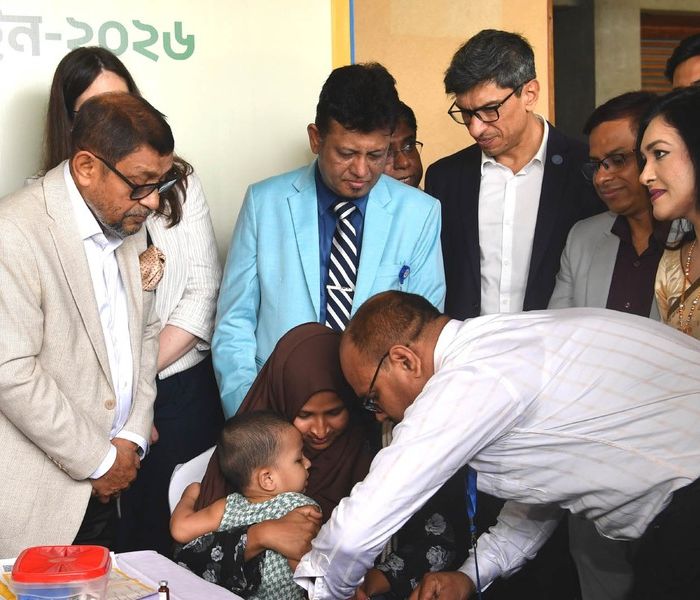
- Featured photograph by Jitu Zaman / Bangladesh Press Information Department. Public domain under the Bangladesh Press Information Department’s published media-use policy. Cropped.