

What if the next treatment for one of the world’s most devastating childhood neurological diseases is not a drug that has yet to be invented?
What if it already exists?
That is the question raised by new research from scientists at Flinders University in Australia, who have identified nine medicines that showed promising effects against cellular changes associated with childhood dementia in laboratory models.
The research focuses particularly on Sanfilippo syndrome, a rare inherited neurological disorder that causes progressive damage to the brain.
The discovery does not mean that doctors can currently prescribe these medicines to children with Sanfilippo syndrome.
It does not mean a cure has been found.
But it could represent something potentially important in rare-disease research: the possibility of repurposing medicines that already exist.
And if the findings survive further testing and eventually translate into successful clinical trials, the path from laboratory discovery to treatment could potentially be shorter than it would be for an entirely new drug.
What Is Sanfilippo Syndrome?
Sanfilippo syndrome is a rare genetic disorder belonging to a group of conditions known as mucopolysaccharidoses.
Children with the disease have difficulty breaking down certain complex molecules called glycosaminoglycans.
As these substances accumulate, they can damage cells and organs.
The brain is particularly affected.
Children can initially develop relatively normally before experiencing progressive neurological deterioration.
Over time, symptoms can include developmental regression, changes in behaviour, sleep problems, loss of communication skills and declining motor abilities.
The disease is devastating not only because of its neurological progression, but because it often begins during childhood.
For families, the diagnosis can mean watching a child gradually lose abilities they previously developed.
There are currently limited treatment options for the neurological damage caused by Sanfilippo syndrome.
That is why researchers are looking at new ways to approach the disease.
The Researchers Took a Different Approach
Instead of starting with thousands of completely new chemical compounds, the researchers looked at medicines that have already been approved for other medical uses.
This strategy is known as drug repurposing.
The logic is relatively straightforward.
If a medicine has already been studied in humans and has an established safety profile for its approved use, researchers may be able to investigate whether it can be useful for another disease.
That does not automatically make the drug safe or effective for the new condition.
Dosage, age, interactions, side effects and the biological effects of the disease can all be different.
But repurposing can potentially eliminate some of the earliest stages of drug development.
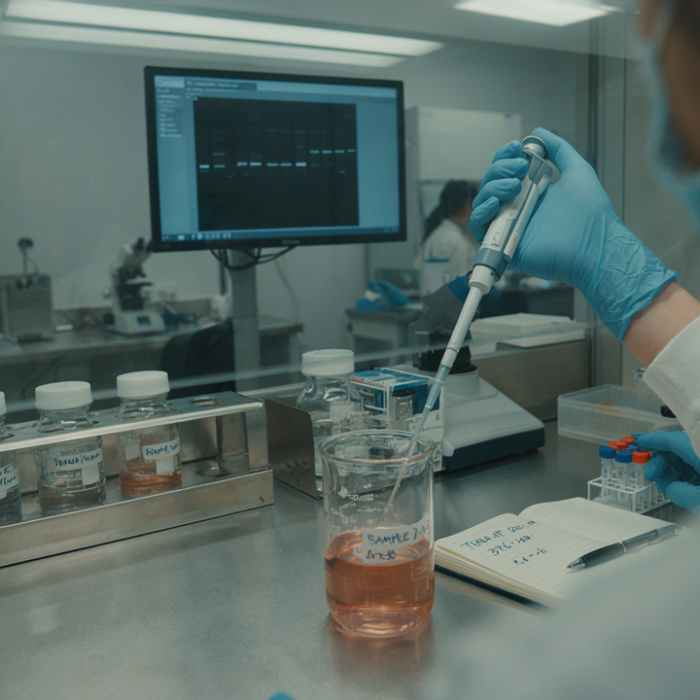
In this study, researchers screened 63 existing medicines using patient-derived brain cells and advanced imaging techniques.
Nine medicines emerged as particularly promising candidates.
What Did the Medicines Actually Do?
This is where the research becomes interesting.
The scientists were not simply looking for whether the cells survived.
They were looking at whether the medicines could improve biological processes associated with the disease.
The research reportedly found improvements in brain-cell function in laboratory models, with some effects appearing within approximately two weeks.
That is encouraging.
But it is also important to understand what the result does not tell us.
Improving the function of cells in a laboratory dish does not automatically mean a child with Sanfilippo syndrome will experience improved memory, movement, speech or quality of life.
Medicine development is full of examples where promising laboratory findings failed during human trials.
The next stage is therefore critical.
Why Existing Medicines Could Matter
Developing a completely new medicine can take years.
Researchers have to establish how the compound works.
They must determine appropriate doses.
They need to study toxicity.
They must conduct preclinical testing.
Then come human clinical trials involving multiple stages.
Only after sufficient evidence is collected can regulators consider approval.
Repurposed medicines can potentially move through parts of this process more quickly because information about their pharmacology and safety may already exist.
That could be particularly important for rare diseases.
Rare neurological diseases often struggle to attract the same level of investment as common conditions.
The patient population may be small.
Clinical trials can be difficult to organize.
Families may be geographically dispersed.
And pharmaceutical companies may face significant financial uncertainty.
Repurposing an existing medicine can therefore provide another route.
AI Is Becoming Part of the Process
Another important part of the research is the use of advanced computational methods.
Researchers are increasingly using artificial intelligence and machine-learning techniques to analyze biological data and identify potential drug candidates.
Instead of testing every possible medicine randomly, algorithms can help researchers identify compounds that appear likely to influence specific biological pathways.
In this case, AI-assisted screening was used alongside laboratory experiments to help identify promising candidates.
This represents a broader change in medical research.
AI is not replacing scientists.
It is becoming another tool that can help them search through enormous amounts of biological information.
The eventual goal is simple:
Find promising treatments faster.
Could These Medicines Actually Change the Disease?
That is the most important question, and it cannot yet be answered.
A disease-modifying treatment is fundamentally different from a medicine that only manages symptoms.
For a progressive neurological disease, researchers ideally want a treatment that changes the underlying biological process responsible for deterioration.
If a medicine could slow the accumulation of damaging substances, protect neurons or restore cellular function, it could potentially alter the course of the disease.
But the current research is still at the laboratory stage.
The scientists have found a promising biological signal.
They have not yet demonstrated that the medicines slow disease progression in children.
That distinction should remain clear.
Why This Could Still Be a Major Breakthrough
Medical breakthroughs do not always begin with a finished treatment.
Sometimes the breakthrough is discovering a new way to approach a disease.
The research demonstrates that existing medicines can be systematically screened against patient-derived cells to identify potential therapeutic candidates.
That method could potentially be applied to other rare neurological disorders.
And that may be the bigger story.
Sanfilippo syndrome is only one disease.
There are thousands of rare diseases affecting humans, many of which have limited treatment options.
If researchers can combine patient-derived cells, high-resolution imaging, artificial intelligence and drug-repurposing databases, they may be able to search for treatments much more efficiently.
The Children Behind the Science
Statistics can make rare diseases seem abstract.
For families living with Sanfilippo syndrome, they are anything but abstract.
A child who once spoke normally may gradually lose language.
A child who once ran may eventually struggle to walk.
A family that once planned years into the future may find itself focused on managing a progressive illness.
This is why even an early-stage discovery can matter enormously.
Families affected by rare diseases often have very few therapeutic options.
A promising research result can therefore provide something that conventional drug development frequently cannot provide quickly enough:
another possibility.
But hope has to be balanced with scientific caution.
Families should not interpret laboratory findings as evidence that an unapproved medicine will treat their child.
Only properly conducted clinical trials can determine whether these candidates are safe and effective for Sanfilippo syndrome.
What Happens Next?
The next step is clinical research.
Before doctors can recommend these medicines specifically for Sanfilippo syndrome, researchers need to determine whether the laboratory findings translate into humans.
Important questions include:
Does the medicine reach the brain?
What dose is required?
Is that dose safe in children?
Does it affect the biological pathway researchers are targeting?
Does it slow neurological decline?
Can the effect be sustained?
Are there serious side effects?
And most importantly:
Does it actually improve outcomes for children?
Those answers will require carefully designed clinical trials.
The Bigger Revolution: Using Old Drugs in New Ways
Drug repurposing is not a new concept.
Some medicines already used today were discovered to have benefits beyond their original purpose.
But modern technology is making systematic repurposing much more powerful.
Researchers now have access to enormous databases of medicines, genetic information and biological pathways.
They can create laboratory models using cells derived from individual patients.
They can use advanced microscopy to watch how cells respond to treatments.
And AI can help identify patterns that might otherwise take researchers years to discover.
This combination could change the economics of rare-disease research.
Instead of asking:
“What new drug can we invent?”
Scientists can increasingly ask:
“Which medicines already exist that might be capable of changing this disease?”
That is a very different question.
Could This Approach Work for Other Neurological Diseases?
Potentially.
Sanfilippo syndrome is a particularly difficult neurological disease, but the underlying strategy is not limited to it.
Researchers could potentially apply similar approaches to other rare genetic disorders.
There is also interest in using patient-derived cells to study diseases such as Parkinson’s disease, Alzheimer’s disease and other neurological conditions.
The challenge is that every disease has different biological mechanisms.
A drug that works in one cellular model may have no useful effect in another.
That is why careful validation remains essential.
The Danger of Calling It a Cure
There is a temptation whenever a promising medical study appears to use the word “cure.”
That would be misleading here.
The research has not established a cure for Sanfilippo syndrome.
It has not established that any of the nine medicines can safely treat children with the disease.
It has identified promising candidates for further investigation.
That may sound less dramatic.
Scientifically, however, it is much more meaningful to describe the evidence accurately.
A medicine that works in a dish has crossed one important scientific hurdle.
It still has many more to cross.
What Makes This Story Different?
The most exciting aspect is not simply the number nine.
It is the possibility that researchers may have found a faster way to discover treatments for diseases that have historically been difficult to treat.
Imagine being able to take an existing library of medicines, test them against cells carrying the biology of a specific disease and rapidly identify the strongest candidates.
That could change rare-disease research.
It could also change how scientists approach neurological disorders more broadly.
The technology is increasingly allowing medicine to become more personalized.
Instead of studying disease only at the population level, researchers can examine what happens inside cells derived from individual patients.
That brings medicine closer to one of its most ambitious goals:
finding treatments based on the biology of the disease rather than simply its symptoms.
Conclusion
The discovery of nine existing medicines that improved brain-cell function in laboratory models of Sanfilippo syndrome is promising, but it is not yet a proven treatment.
The next stage will determine whether the laboratory findings can translate into real benefits for children.
That uncertainty is important.
So is the potential.
If even one of these medicines eventually proves capable of safely slowing neurological deterioration, researchers could have found a treatment pathway that might otherwise have taken years to discover.
More importantly, the study demonstrates how modern medical research is changing.
Scientists are combining patient-derived cells, artificial intelligence, advanced imaging and existing pharmaceutical knowledge to search for treatments in ways that were previously difficult or impossible.
For families affected by childhood dementia, the ultimate question is not how impressive the laboratory result sounds.
It is whether the discovery can eventually help a child keep the abilities that the disease threatens to take away.
That answer is still ahead.
But for a disease with so few options, finding nine new possibilities from medicines that already exist is a development worth watching.
Frequently Asked Questions?
Sanfilippo syndrome is a rare inherited neurological disorder in which the body cannot properly break down certain complex molecules. Their accumulation can progressively damage the brain and other tissues.
There is currently no established cure that reverses the neurological damage caused by Sanfilippo syndrome. Research is investigating several potential approaches.
No. Researchers identified nine existing medicines that showed promising effects in laboratory models. They have not yet been proven effective treatments for children.