A diplomatic rupture between Ethiopia and Sudan is exposing how the wars inside both countries could become entangled across their shared frontier. Sudan alleges that Ethiopia is enabling the Rapid Support Forces, while Addis Ababa accuses Khartoum of helping Tigrayan rebels. Both governments deny the charges, and the Associated Press says it could not independently verify them. The consulate expulsions are confirmed; the alleged cross-border military support is not.
A diplomatic dispute with military consequences
The latest accusations between Ethiopia and Sudan are serious because they connect two conflicts that have already destabilized the Horn of Africa. Sudan’s military authorities say Ethiopia has allowed the Rapid Support Forces, or RSF, to use territory near the border for camps, drone operations and cross-border attacks. Ethiopia rejects the allegation. Addis Ababa, in turn, says Sudan is supporting Tigrayan forces fighting Ethiopia’s federal government after clashes resumed in September. Sudan denies that charge as well.
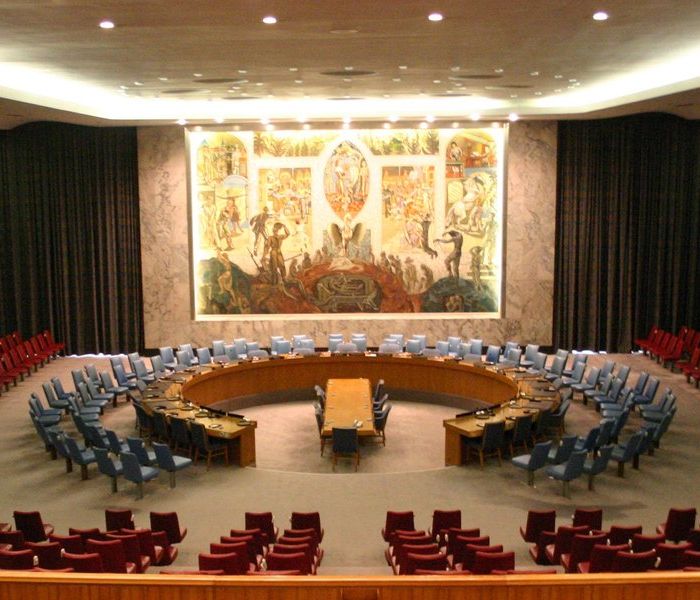
The dispute has moved beyond public statements. The Associated Press reported that Sudan took its complaint to the United Nations and the African Union, while Ethiopia expelled six Sudanese consular staff and ordered the mission closed. Reuters separately reported the closure of each country’s consulate near the frontier. These are concrete diplomatic steps, but they do not prove that either government is directing armed groups across the border.
That distinction matters. The allegations involve military bases, drones and assistance to non-state forces, all of which would carry major consequences if verified. Yet the AP report says it could not independently confirm the claims. A careful account must therefore separate what governments have alleged from what independent reporting and international monitors have established. The danger is real even while the evidence remains incomplete: public accusations can narrow the room for compromise and encourage military planners to assume the worst.
What the evidence does and does not show
Sudan’s accusation is not emerging in a vacuum. Earlier reporting by Reuters described allegations that an RSF-linked training facility had been established in Ethiopia, while researchers have examined activity at sites close to the frontier. Such reporting raises questions that deserve independent investigation. It does not, on its own, establish that Ethiopia’s national leadership authorized a military operation or that every facility identified is being used for the purpose alleged by Khartoum.
The same standard applies to Ethiopia’s claims about Tigrayan fighters. The renewed fighting in northern Ethiopia has revived fears that the Pretoria agreement of November 2022 is coming apart. Addis Ababa has accused outside actors of supporting its opponents, but allegations about assistance from Sudan, Egypt or Eritrea must be tested against evidence rather than repeated as established fact. Each government has denied involvement in the accusations directed at it.
The most useful next step would be independent access to the locations named by the parties, corroborated satellite analysis, and a public account of the evidence submitted to regional and international bodies. Without that, the dispute risks becoming a contest of claims in which each new denial is treated as proof of bad faith. Verification is not a technical detail. It is the foundation for any credible de-escalation process.
Sudan’s war has become a drone conflict
The scale of Sudan’s war helps explain why the border accusations are so alarming. The conflict between the Sudanese Armed Forces and the RSF began in April 2023 and has devastated cities, disrupted agriculture and driven millions from their homes. The AP report cites estimates of at least 59,000 people killed and about 13 million displaced. Humanitarian agencies warn that famine and disease are spreading in areas where aid workers cannot reach civilians safely.
Drone warfare has become one of the conflict’s defining features. At a United Nations press briefing on 17 November, the Office of the High Commissioner for Human Rights described a steep toll from attacks involving unmanned aircraft. The briefing said at least 1,390 civilians were killed between January and June 2026, with more than 80 percent of those deaths caused by drone strikes. It also reported a further 840 civilian deaths between July and October, including close to 520 in drone attacks.
The figures show why a claim that a neighbouring country is facilitating drone operations carries such political weight. Drones can strike airfields, fuel depots, power infrastructure and populated areas without requiring a large conventional force to cross a border. Their components, operators, satellite links and maintenance networks can move through several countries. That makes attribution difficult, and it gives governments an incentive to blame external actors when attacks occur. It also makes transparent investigation more important, not less.
Ethiopia’s internal conflict complicates the picture
Ethiopia is not a stable rear area watching Sudan’s war from a distance. The country is still dealing with the consequences of the 2020 to 2022 conflict in Tigray, which ended with the Pretoria agreement but left major questions about disarmament, political authority, territorial control and the return of displaced people unresolved. Renewed clashes in September 2026 have made those questions urgent again. A local confrontation can quickly acquire a regional dimension when neighbouring governments accuse one another of arming rival groups.
The Tigray conflict also sits within a wider contest over Ethiopia’s federal structure. Regional authorities, federal forces and local armed groups do not always share the same objectives. A government accusation that an external state is supporting a rebel movement may reflect genuine intelligence concerns, domestic political pressure, or both. That is why independent evidence is essential before a claim of state sponsorship is treated as fact.
The risk is not limited to Tigray. Ethiopia’s border regions include communities with family, trade and pastoral links that pre-date modern state boundaries. Insecurity can disrupt seasonal movement, markets and access to farmland. When armed groups operate near the frontier, local incidents can be interpreted through national security narratives, making a small clash harder to contain.
A contested border and a shared river
The Ethiopia-Sudan frontier has long been a source of tension, especially around Al-Fashaga, a fertile agricultural area claimed by both countries. The dispute involves land use, farming, security patrols and the authority to administer territory. It has periodically produced armed confrontations, even when senior officials have tried to keep relations functional. The current allegations land on top of that unresolved dispute, increasing the chance that military movements will be read as territorial pressure.
The Grand Ethiopian Renaissance Dam adds another layer. Ethiopia views the dam on the Blue Nile as a major development project and a source of electricity and national pride. Sudan and Egypt have sought stronger guarantees over filling and operation, although Sudan’s position has shifted at different points as it weighed the potential benefits of regulated flows against safety and coordination concerns. The dam is not the cause of the current allegations, but it is part of a relationship in which water, land and security are already politically sensitive.
These issues should not be collapsed into one dispute. A disagreement over the dam does not prove military interference, and the Al-Fashaga border question does not establish that either state is sponsoring armed groups. But they create a background in which mistrust can spread from one policy area to another. Diplomacy becomes harder when every new event is interpreted as part of a larger hostile plan.
Regional alliances raise the stakes
The Horn of Africa is connected to the Red Sea, the Gulf of Aden and the wider Middle East through trade routes, ports, security partnerships and the movement of weapons. Sudan’s war has drawn attention to the roles of regional powers, while Ethiopia’s own relationships with Gulf states and neighbouring governments shape its security calculations. Allegations about outside assistance to the RSF have been disputed by the countries named. They should be reported as allegations, not as a settled map of proxy warfare.
Eritrea is another important factor because of its history of conflict with Ethiopia and its proximity to Tigray. Egypt has its own concerns about the Nile and regional influence. The United Arab Emirates has been accused by Sudan of supporting the RSF, an allegation it denies. These relationships mean that an Ethiopia-Sudan crisis could attract pressure from several capitals, each with different interests. The result could be a diplomatic alignment problem that is larger than the original border incident.
The international response should therefore focus on preventing escalation rather than rewarding whichever side makes the strongest accusation. The African Union and the Intergovernmental Authority on Development have a role in keeping channels open. The United Nations can help document civilian harm and support humanitarian access. Regional governments should avoid public threats, troop movements designed for signalling, and any action that makes a limited dispute look like preparation for a wider war.
What de-escalation would require
A practical first step would be a joint or independently monitored border mechanism that records military incidents, drone activity and the movement of armed groups. Such a mechanism would not settle the Al-Fashaga dispute or resolve the war in Sudan. It could, however, reduce the risk that a local event becomes a trigger for retaliation. Any arrangement would need access to the areas named in the allegations and a clear process for publishing findings.
The two governments should also restore consular and security communication channels. Expelling diplomats may satisfy domestic audiences, but it removes people who can clarify incidents before they spiral. A hotline between military commands, backed by the African Union, could help distinguish a border violation from a planned attack. Humanitarian agencies also need safe routes to assist people displaced by fighting on both sides of the frontier.
The deeper solution depends on political progress inside each country. Sudan needs a path away from military rule by force and toward a credible civilian-led settlement. Ethiopia needs to prevent renewed fighting in Tigray from undoing the 2022 agreement and to address unresolved federal and regional disputes. External governments can encourage restraint, but they cannot substitute for agreements that local communities and political actors regard as legitimate.
For now, the most accurate description is a dangerous diplomatic escalation, not an inevitable interstate war. The allegations are serious, the humanitarian stakes are immense and the border has a history of conflict. But the evidence must be tested, not assumed. If Ethiopia and Sudan can separate verified incidents from political claims, restore communication and accept neutral monitoring, they still have room to prevent two domestic wars from becoming a regional confrontation.
Frequently asked questions
Have Ethiopia and Sudan proved that the other is supporting armed groups?
No. Both governments have made serious accusations, but the Associated Press said it could not independently verify the central claims. The consulate expulsions and closures are documented diplomatic actions; they are not proof of state direction of armed groups.
Why does drone warfare matter to this dispute?
Drones have caused a large share of documented civilian deaths in Sudan in 2026. Allegations that a neighbouring country is facilitating drone operations therefore carry major security implications, even though the specific claims remain contested.
Could the dispute lead to a wider war?
It is not inevitable, but the risk of miscalculation is elevated by the unresolved border, renewed fighting in Tigray, the Sudan war and regional rivalries. Independent monitoring and restored military communication could reduce that risk.
Sources and further reading
- Associated Press: Ethiopia and Sudan accuse each other of backing armed fighters (16 November 2026).
- Reuters: Ethiopia and Sudan close each other’s consulates after allegations of meddling (4 November 2026).
- UN Geneva press briefing on the human rights situation in Sudan (17 November 2026).
- UN Sudan: Report details civilian toll from the surge in drone strikes (November 2026).
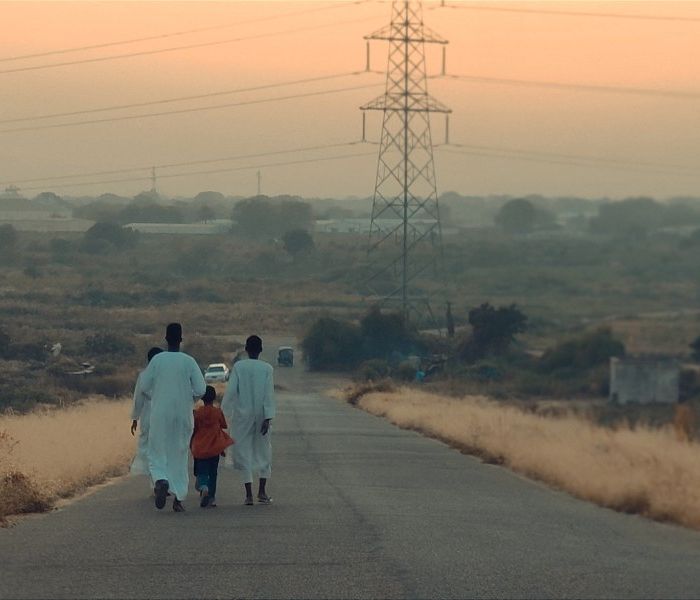
- Featured image credit: Jnyssen, Wikimedia Commons, CC BY-SA 4.0. Archival photograph of Humera from 2017, not a depiction of the current allegations. Source and licence.