

Russia has just sent another reminder that the geopolitical map of Asia is changing.
Military exercises involving Russian missiles, naval forces and submarines have taken place near the disputed southern Kuril Islands, a chain of islands claimed by both Russia and Japan.
On the surface, the drills might look like another routine Russian military exercise.
They are not.
The location matters.
The timing matters.
And perhaps most importantly, the countries watching these exercises matter.
Japan is a major U.S. ally in Asia. Russia is increasingly aligned with China on security and economic issues. North Korea is developing its own military capabilities nearby, while the United States is strengthening its presence throughout the Indo-Pacific.
Against that background, Russian military activity near Japanese-claimed territory carries significance far beyond the islands themselves.
What Happened?
Russia conducted military exercises around the southern Kuril Islands involving naval and missile forces.
The exercises reportedly included submarines, warships and coastal defence systems.
The drills took place around territory that Japan calls the Northern Territories and Russia administers as part of its Far East.
Japan has long protested Russia’s control of the islands.
The dispute dates back to the final days of the Second World War, when Soviet forces occupied the islands. The disagreement has continued for decades and has prevented Moscow and Tokyo from reaching a formal peace treaty to fully settle their World War II-era differences.
That history makes every major military exercise in the region politically sensitive.
The latest drills come shortly after Russian President Vladimir Putin visited the disputed territory, adding another layer of symbolism to the military activity.
Why Are the Kuril Islands So Important?
The Kuril Islands stretch between Russia’s Kamchatka Peninsula and Japan’s northern island of Hokkaido.
Geographically, they sit in an extremely important position.
The islands provide Russia with access between the Sea of Okhotsk and the Pacific Ocean.
That matters enormously for the Russian Pacific Fleet.
The region is also close to important Japanese sea lanes and sits within the wider strategic environment surrounding the North Pacific.
For Japan, however, the issue is about more than geography.
Tokyo considers four southern islands to be its Northern Territories and maintains that Russia’s occupation is illegitimate.
Moscow rejects Japan’s position and treats the islands as Russian territory.
So when Russian military forces conduct missile exercises there, Japan sees more than a military drill.
It sees Moscow reinforcing its claim over territory that Tokyo still considers its own.
Why Is This Happening Now?
The timing is particularly interesting.
Relations between Russia and Japan have deteriorated sharply since Russia’s invasion of Ukraine.
Japan joined Western sanctions against Moscow and strengthened its cooperation with the United States and European countries.
Russia, in turn, has increasingly viewed Japan as part of the Western coalition opposing Moscow.
The old territorial dispute has therefore acquired a new strategic dimension.
Before the Ukraine war, Tokyo and Moscow were at least attempting to improve economic and political relations.
Those efforts have largely collapsed.
Russia’s relationship with China has simultaneously become much closer.
That means the security environment surrounding Japan now looks very different from what it did a decade ago.
Japan Is Caught Between Several Strategic Threats
Japan already faces major security concerns involving China and North Korea.
China’s military expansion has transformed the East Asian security environment.
Beijing has increased military pressure around Taiwan and continues to dispute maritime territories with several countries.
North Korea continues developing missiles and nuclear weapons.
Now Russia is increasing military activity around Japan’s northern frontier.
These developments are separate, but from Tokyo’s perspective they form part of a larger problem.
Japan increasingly finds itself surrounded by countries with significant military capabilities and, in some cases, governments openly hostile to the existing U.S.-led security order.
That has already influenced Japanese defence policy.
Tokyo has been increasing defence spending, expanding missile capabilities and strengthening cooperation with the United States and other regional partners.
The Russian exercises reinforce the argument within Japan that the country’s security environment is becoming more dangerous.
Could Russia and Japan Actually Go to War?
That remains highly unlikely.
Military exercises do not automatically mean that a country is preparing to launch a war.
Russia has conducted exercises in the region before.
Japan also conducts military exercises and regularly monitors foreign military activity around its territory.
There is currently no indication that Russia is preparing for an imminent attack on Japan.
But there is another issue that deserves attention.
Military activity can increase the risk of accidents and miscalculation.
The more aircraft, submarines and warships operating in close proximity, the greater the possibility that an incident could occur.
A collision, an accidental missile launch or a confrontation involving aircraft could rapidly become a political crisis.
And when relations are already poor, governments have less trust to prevent such incidents from escalating.
Russia Has Another Reason to Care About the Pacific
Russia is often discussed primarily through the lens of Europe and Ukraine.
That can make it easy to overlook the importance of the country’s Pacific military presence.
Russia is geographically unique.
It stretches from Europe all the way across northern Asia to the Pacific.
The Pacific Fleet is therefore an important part of Russia’s military structure.
Moscow also has a growing strategic relationship with China.
The two countries have conducted joint military exercises and increased defence cooperation.
That does not mean Russia and China have created a formal military alliance identical to NATO.
But their growing cooperation has changed calculations across East Asia.
Japan has to consider not only Russia’s capabilities but also what a closer Russia-China security relationship could mean for the region.
China Is the Unavoidable Factor
It is impossible to understand Russia’s military posture in East Asia without considering China.
Russia and China have dramatically expanded their strategic relationship over the past several years.
China has become one of Russia’s most important economic partners, particularly since Western sanctions disrupted Moscow’s relations with Europe.
The two countries also share concerns about U.S. military influence.
For Japan, this creates a complicated strategic situation.
Tokyo is a U.S. ally.
Washington regards Japan as one of its most important military partners in the Indo-Pacific.
American forces are stationed in Japan, including major naval and air assets.
Any serious military confrontation involving Japan would therefore have implications for the United States.
That is one reason why a Russia-Japan conflict would be much bigger than a bilateral dispute.
The Kuril Islands Could Become a Test of Japan’s Military Strategy
The islands themselves are unlikely to become the next major battlefield.
But they could become an important test of Japan’s ability to respond to military pressure across multiple directions.
Japan has increasingly shifted toward a more assertive defence strategy.
Tokyo has discussed counterstrike capabilities, longer-range missiles and greater integration with U.S. forces.
The country’s traditional postwar approach to defence is gradually changing.
The Russian military exercises strengthen the argument that Japan cannot concentrate exclusively on one potential threat.
It has to think about the entire northern and western arc of its security environment.
Russia in the north.
China in the southwest and west.
North Korea to the west.
Taiwan farther south.
That is an extraordinary strategic challenge for a country whose territory consists largely of islands.
What Happens If Tensions Continue?
There are several possible outcomes.
The first is that the exercises remain limited.
Russia continues conducting military drills, Japan protests diplomatically, and the situation remains tense without developing into a direct confrontation.
The second possibility is increased military competition.
Japan could respond by increasing surveillance and military deployments in the region, while Russia strengthens its forces around the Kurils.
That would create a cycle in which every defensive move by one side is interpreted as threatening by the other.
The third and most dangerous possibility would involve an incident.
An aircraft interception or naval confrontation could trigger a crisis even if neither government wanted a war.
That is why communication and military deconfliction mechanisms matter.
A Bigger Indo-Pacific Story Is Developing
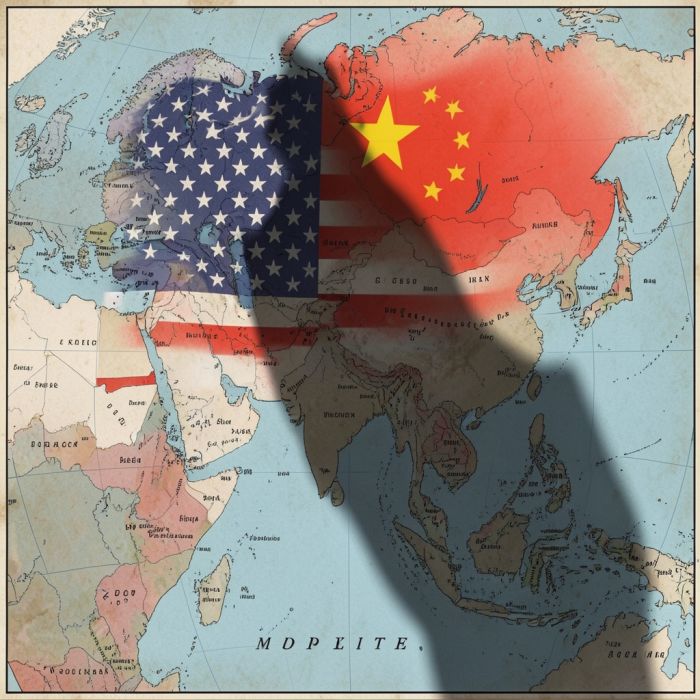
The most important point is that the Kuril Islands should not be viewed as an isolated territorial dispute.
The region is becoming part of a much larger strategic competition.
Russia wants to preserve its position as a major Pacific power.
China is challenging the existing balance of power in East Asia.
Japan is expanding its defence capabilities.
The United States is reinforcing its alliances.
North Korea continues developing its nuclear and missile programs.
And Taiwan remains one of the world’s most dangerous potential flashpoints.
The Indo-Pacific is therefore becoming increasingly militarised.
The question is no longer whether countries are preparing for a more dangerous regional environment.
They clearly are.
The question is whether that military preparation will deter conflict or eventually make an accidental confrontation more likely.
What Should the World Watch Next?
There are several developments worth monitoring.
First, whether Russia expands its military presence around the Kuril Islands.
Second, whether Japan announces additional deployments or exercises in response.
Third, whether China comments on the Russian drills.
Fourth, whether the United States increases military activity alongside Japan in the region.
And finally, whether the territorial dispute begins affecting broader diplomatic relations between Tokyo and Moscow.
None of these developments alone would mean that war is approaching.
But taken together, they could reveal where the strategic balance in the North Pacific is heading.
Conclusion
Russia’s latest missile exercises near Japan’s disputed islands may not represent the beginning of a new war.
But they are a reminder of how many geopolitical pressures are now converging in the Indo-Pacific.
The Kuril Islands have been disputed for decades.
What has changed is the environment surrounding them.
Russia is more confrontational with the West.
China is more powerful and assertive.
Japan is rebuilding its military capabilities.
The United States is strengthening its alliances.
North Korea remains a nuclear-armed state.
That makes the northern Pacific a far more strategically important region than it was years ago.
For Japan, the Russian exercises are therefore not simply about a handful of islands.
They are another warning that the country’s security environment is becoming more complicated.
And if tensions continue rising across the Indo-Pacific, the Kuril Islands may eventually become one of the places where the changing balance of power becomes impossible to ignore.
Frequently Asked Questions?
The dispute dates back to the final stages of World War II, when the Soviet Union occupied the islands. Japan continues to claim four southern islands, while Russia administers them as Russian territory.
Russia says the Kuril Islands are part of its territory and has repeatedly conducted military exercises to strengthen its defence posture in the region.
There is no evidence that the exercises indicate an imminent Russian attack on Japan. Military drills are not, by themselves, proof that an invasion is being planned.