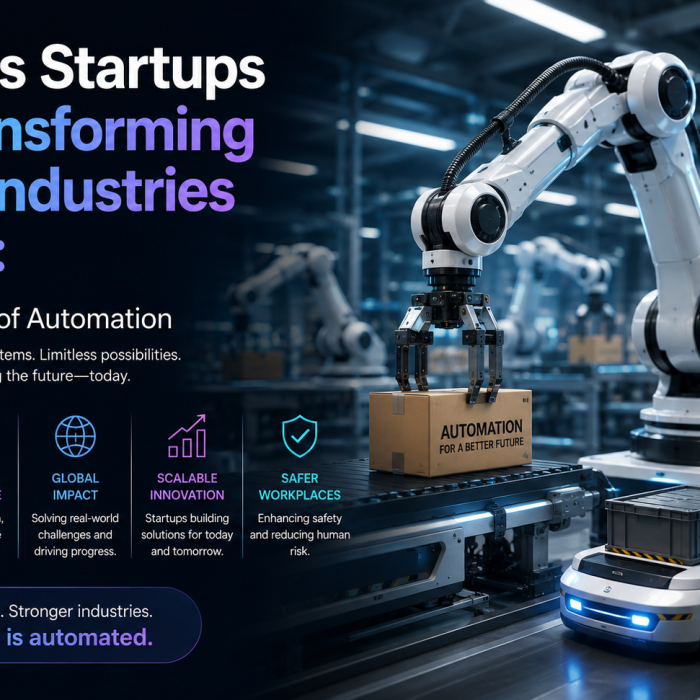


The Startup World Is Entering a New Innovation Era
For years, startup headlines were dominated by food delivery apps, e-commerce platforms, ride-hailing services, and fintech companies. These businesses reshaped consumer behavior and attracted billions in venture capital.
Today, however, the conversation is changing.
In 2026, investors are increasingly shifting their attention toward DeepTech startups companies developing advanced technologies rooted in scientific research and engineering. Artificial intelligence, robotics, semiconductors, biotechnology, quantum computing, climate technology, and space exploration are no longer futuristic concepts confined to laboratories. They are becoming the foundation of tomorrow’s global economy.
This transition marks one of the biggest shifts in the startup ecosystem over the past decade. Investors are now looking beyond quick wins and are supporting companies capable of solving complex global challenges through breakthrough innovation. Industry observers note that DeepTech has become one of the strongest long-term investment themes despite fluctuations in overall funding volumes.
What Exactly Is DeepTech?
Unlike traditional technology startups that primarily focus on software or digital services, DeepTech companies build products based on advanced scientific discoveries and engineering innovations.
These startups often operate in fields such as:
- Artificial Intelligence
- Robotics
- Semiconductor Design
- Biotechnology
- Aerospace and Space Technology
- Climate Technology
- Quantum Computing
- Advanced Manufacturing
- Clean Energy
- Defense Technology
Building these businesses requires years of research, highly specialized talent, significant capital, and patience. The reward, however, can be transformational not just for investors, but for entire industries.
Why Investors Are Turning to DeepTech
Several years ago, venture capital often favored startups that could scale quickly with relatively low development costs.
Today, that strategy is evolving.
Investors increasingly recognize that technologies capable of addressing healthcare challenges, energy efficiency, manufacturing automation, cybersecurity, and national security have enormous long-term value.
Governments are also playing a larger role by introducing funding programs, research partnerships, and incentives designed to strengthen domestic innovation. In India, for example, policy initiatives and dedicated research funds are encouraging more capital to flow into DeepTech startups.
Rather than asking, “How quickly can this startup grow?”, investors are asking a different question:
“Can this company build technology the world genuinely needs?”
That subtle shift is changing the venture capital landscape.
Artificial Intelligence Is Fueling the DeepTech Boom
Artificial intelligence remains the strongest driver of DeepTech investment.
But investors are no longer interested in startups simply adding AI to their marketing materials.
Instead, they’re backing companies using AI to solve measurable problems.
Examples include:
- AI-powered medical diagnostics
- Industrial automation
- Predictive maintenance
- Smart manufacturing
- Drug discovery
- Financial fraud detection
- Agricultural optimization
- Autonomous robotics
Businesses adopting these solutions often achieve faster operations, reduced costs, and better decision-making.
This ability to produce measurable business outcomes makes AI-focused DeepTech startups especially attractive to venture capital firms.
India’s DeepTech Ecosystem Is Growing Rapidly
India is becoming one of the world’s fastest-growing DeepTech ecosystems.
A combination of government support, engineering talent, research institutions, and increasing investor confidence is helping founders tackle ambitious scientific problems.
One recent milestone came when Skyroot Aerospace successfully advanced India’s private space ambitions, inspiring renewed confidence in frontier technology startups and encouraging more entrepreneurs to enter sectors such as aerospace, AI, and advanced engineering.
At the same time, universities, incubators, and venture funds are supporting startups working on robotics, semiconductor technologies, biotechnology, defense systems, and climate innovation.
Although funding values fluctuate from year to year, investor sentiment remains remarkably positive because many believe India’s strongest DeepTech success stories are still ahead.
DeepTech Requires Patience
Unlike consumer apps that may reach millions of users within months, DeepTech companies often spend years refining products before generating substantial revenue.
Developing a medical device, launching a satellite, manufacturing advanced chips, or commercializing biotechnology takes time.
Recognizing this reality, many founders are adopting hybrid business models.
Some generate early revenue through consulting services, licensing technology, or adjacent commercial products while continuing research on their flagship innovations.
This strategy helps maintain investor confidence and funds ongoing research without sacrificing long-term vision.
Universities Are Becoming Startup Launchpads
One of the most encouraging developments in 2026 is the growing relationship between universities and startups.
Research institutions are increasingly helping scientists transform academic discoveries into commercial products.
Instead of remaining inside laboratories, innovations in healthcare, robotics, agriculture, materials science, and AI are reaching businesses and consumers much faster.
Student entrepreneurs are also becoming major contributors to the ecosystem.
Recent reports indicate that DeepTech has become the leading sector among student-founded startups in India, reflecting growing confidence among young innovators to tackle complex engineering problems instead of building only traditional digital businesses.
Challenges Every DeepTech Founder Faces
Building DeepTech companies remains difficult.
Founders often encounter challenges such as:
- Long research cycles
- High development costs
- Limited specialized talent
- Regulatory approvals
- Intellectual property protection
- Manufacturing complexity
- Extended fundraising timelines
Unlike software startups that can launch quickly, DeepTech businesses must balance scientific excellence with commercial viability.
Industry experts increasingly emphasize that breakthrough technology alone isn’t enough. Strong pricing strategies, customer demand, distribution, and sustainable revenue models remain equally important for long-term success.
Opportunities for Entrepreneurs
Despite these challenges, the opportunities have never been greater.
Global demand continues rising for technologies that address:
- Healthcare access
- Food security
- Climate resilience
- Clean energy
- Advanced manufacturing
- National security
- Digital infrastructure
- Industrial automation
Founders capable of solving these problems are likely to attract increasing attention from governments, corporations, and venture capital firms.
As AI tools reduce development time and improve research productivity, more entrepreneurs can pursue ambitious technical ideas that previously required enormous resources.
The Road Ahead
The startup ecosystem is entering a period where scientific innovation and commercial success are becoming closely connected.
DeepTech startups are no longer viewed as high-risk experiments.
They are increasingly seen as companies capable of building entirely new industries.
While consumer technology will continue evolving, many analysts believe the next generation of global startup leaders will emerge from laboratories, research centers, engineering campuses, and innovation hubs rather than traditional software accelerators.
For founders willing to solve difficult problems, the coming decade may offer unprecedented opportunities.
Frequently Asked Questions
A DeepTech startup develops products based on advanced scientific research or engineering, including AI, robotics, biotechnology, quantum computing, semiconductors, climate technology, and aerospace.
Investors believe DeepTech companies can solve major global challenges while creating strong long-term commercial value. Government support and enterprise demand are also accelerating growth.
Healthcare, AI, robotics, climate technology, semiconductors, defense, advanced manufacturing, agriculture, biotechnology, and space technology are among the fastest-growing sectors.
Conclusion
DeepTech is redefining what it means to build a startup. Instead of focusing only on speed, today’s most ambitious founders are solving scientific and engineering challenges with the potential to transform industries and improve lives. As venture capital, governments, and research institutions continue investing in frontier technologies, DeepTech startups are poised to become some of the most influential companies of the next decade. For entrepreneurs, the message is clear: solving hard problems may be the most valuable business strategy of all.