Space & Aeronautics | November 2, 2026 | Space-enabled infrastructure
ESA opens a new route from orbit to electricity networks
The European Space Agency has launched a call for proposals aimed at making Europe’s electricity transmission systems more resilient through the use of space-enabled services. The opportunity, listed with an opening date of November 2, 2026, is being developed with ENTSO-E, the European network of electricity transmission system operators. It seeks proof-of-concept studies and pilot projects rather than announcing a finished satellite system or a contract to deploy technology across the grid. The central idea is practical: Earth-observation data, satellite communications and space-based positioning and timing may help grid operators anticipate disruption and recover when terrestrial systems are under pressure. The program comes at a time when severe weather, physical security threats and increasingly interconnected energy infrastructure have made grid resilience a major public-policy concern. Its value will depend on whether proposed tools can improve decisions made by real operators.
What the call is asking companies to build
ESA describes two complementary challenge areas. The first focuses on situational awareness during critical events, including monitoring environmental hazards and infrastructure conditions. The second concerns operational resilience, such as dependable timing, communications and positioning when ordinary systems are degraded. These are broad invitations for innovation, not specifications for one mandatory product. The agency emphasizes that proposed projects should build on existing space capabilities and demonstrate their operational value for electricity transmission system operators. That requirement is important. A satellite data feed is not automatically useful simply because it covers a large geographic area. Grid operators need timely, accurate and interpretable information that fits their safety procedures. A credible proposal must therefore show how a space-derived signal would change an operational decision, reduce uncertainty or support recovery in a measurable way.
Why satellites can help after severe weather
Wildfires, floods, storms and heatwaves can damage transmission corridors or create conditions in which equipment becomes more vulnerable. Satellite Earth observation offers a wide-area perspective that may be difficult to obtain quickly from ground inspections alone. Optical imagery can help identify visible changes, while radar observations can provide information under some conditions where clouds limit conventional photography. Space-derived environmental measurements may also support forecasting and post-event damage assessment. But satellite observations have limitations. A spacecraft may not revisit the same location at precisely the moment an operator needs it, and resolution may be insufficient for a particular asset. Clouds, processing delays and the need to verify observations on the ground can complicate decisions. ESA’s opportunity is therefore strongest when it treats satellite data as a complement to terrestrial monitoring rather than as a substitute for engineers and local sensors.
The problem of vegetation and transmission corridors
Electricity lines cross forests, farmland, mountains and densely populated areas. Vegetation encroachment can create safety risks, particularly during dry or windy conditions. Monitoring these corridors is labor-intensive and can be difficult in remote terrain. ESA identifies vegetation monitoring and changes in infrastructure surroundings among the potential uses of space-enabled services. An effective system could combine repeat satellite observations with existing asset maps to highlight locations that deserve closer inspection. It would still need to distinguish harmless seasonal growth from conditions that genuinely threaten equipment. False alarms could waste resources, while missed hazards could have serious consequences. For that reason, the usefulness of a proposed service should be judged by the quality of its decisions and its integration with inspection workflows, not merely by the number of satellite images it processes.
A grid also depends on invisible timing signals
Modern electricity infrastructure relies on precise synchronization for monitoring, protection and control. Satellite navigation systems can provide timing references, but those signals can be vulnerable to interference, spoofing or loss of reception. ESA’s second theme explicitly mentions high-accuracy and resilient timing, as well as the detection of signal degradation. This reflects a less visible aspect of space infrastructure: satellites are not only cameras and communications relays. Their timing services underpin a range of critical systems. A resilience solution might combine satellite signals with local clocks or other sources to reduce dependence on any single reference. However, no one should infer that ESA has already demonstrated a specific technology or guaranteed performance for grid substations. The call invites proposals that would need to prove such capabilities under relevant operational conditions.
Communications when terrestrial networks fail
Major storms, floods or other emergencies can disrupt fiber links, mobile networks and the power supply to communications equipment. Transmission operators need dependable ways to coordinate repairs and maintain situational awareness during such events. Satellite communications may provide backup connectivity where terrestrial infrastructure is damaged or unavailable. ESA includes that possibility within its operational-resilience theme. Yet emergency communications must satisfy demanding requirements for cybersecurity, latency, reliability and control over sensitive information. A commercially available satellite connection may not meet every operational need without additional engineering. The value of a pilot would lie in testing the complete service, including ground terminals, integration, failover procedures and staff workflows. A convincing demonstration would show that a backup path works when it is needed, not just when conditions are normal.
Two themes have different application windows
The opportunity page carries an overall opening date of November 2, 2026, but its detailed schedule distinguishes when applicants can submit under each theme. ESA says applications for the first theme, situational awareness for critical events, are invited from November 4, 2026, through January 29, 2027. Applications for the second theme, strengthening operational resilience, are scheduled from February 1 through April 30, 2027. Those dates matter for companies assessing whether they can assemble partners and credible pilot plans in time. They also mean that the November 2 listing should not be described as evidence that both streams are already accepting applications. Applicants should consult the live ESA opportunity page for eligibility, procedural details and any later changes before preparing a submission. The announcement creates a route toward testing, not an immediate operational rollout.
ENTSO-E involvement does not mean procurement is promised
The collaboration with ENTSO-E is significant because the organization brings an understanding of challenges faced by European transmission networks. But ESA is explicit about the limits of that involvement. The development of use cases does not amount to an endorsement, certification or commitment by ENTSO-E or any individual transmission operator to buy a proposed product. Participation in pilots is subject to each operator’s own interest and applicable security, regulatory and procurement requirements. That is an important distinction for the space industry. Winning interest from a public program is not the same as securing a customer. Companies will need to demonstrate practical value, affordability and compliance with critical-infrastructure rules. The most successful proposals may be those designed around operator workflows from the beginning rather than those seeking a market for technology after it has already been built.
How success should be measured
A pilot’s success should be assessed against operational outcomes. Does a satellite-assisted service detect an emerging wildfire threat early enough to influence grid management? Can it identify storm damage accurately enough to prioritize inspections? Does a timing or communications backup remain dependable under realistic disruption? Those questions require benchmarks, independent evaluation and careful consideration of false alarms and missed events. Security matters too, because systems connected to critical infrastructure must be protected against misuse. ESA’s announcement emphasizes that the challenges are intentionally generalized and should not be read as descriptions of deficiencies in any named operator’s systems. That caution is appropriate. The purpose of the call is to explore possible improvements, not to disclose vulnerabilities. Strong projects will respect that boundary while still offering measurable evidence of value.
A wider role for space technology in everyday life
Space missions are often discussed in terms of launches, exploration and spectacular images. This initiative highlights a different side of the sector: services that could help keep essential infrastructure functioning on Earth. Satellites can observe environmental change, distribute timing signals and maintain communications over large distances. Integrating those capabilities into electricity networks could make the benefits of space investment more tangible for households and businesses. But the path from an attractive concept to a trusted operational service is demanding. It requires technical maturity, operator cooperation, security assurance and a credible economic case. The November 2 ESA call marks the beginning of a structured opportunity to test those claims. Whether it produces widely used grid-resilience tools will depend on what the pilots demonstrate and what transmission operators ultimately decide to adopt.
Frequently asked questions
Has ESA deployed a new satellite system for European electricity grids?
No. ESA has opened a call for proof-of-concept studies and pilot projects using existing space-enabled capabilities.
When can companies apply?
The opportunity lists November 2 as its opening date; the first theme’s application window begins November 4, 2026, and the second is scheduled for February 2027.
Will ENTSO-E buy the successful projects?
Not necessarily. ESA explicitly states that participation in the initiative does not constitute a procurement or purchase commitment.
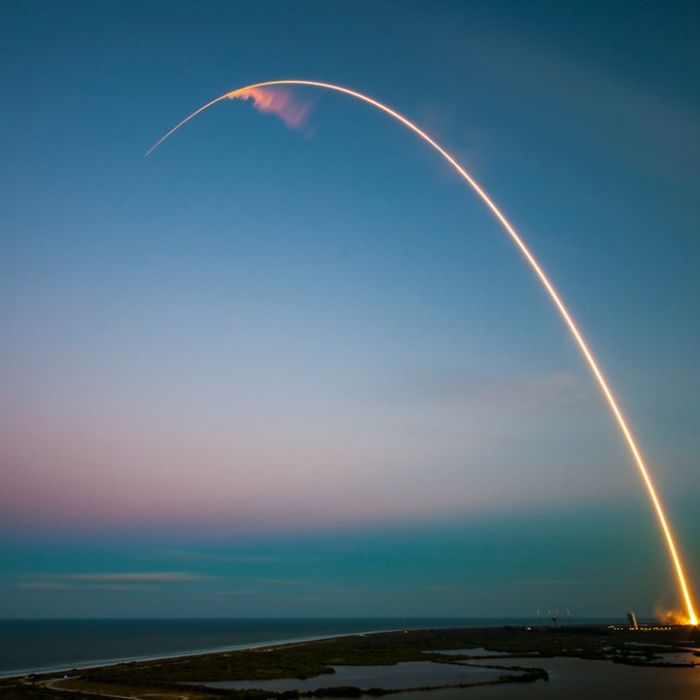
Primary source: European Space Agency, Space-Enabled Solutions for Resilient Grids, November 2, 2026. Featured image: USGS / Unsplash, illustrative Earth-observation image.