After more than two decades studying violent cosmic explosions, NASA’s Neil Gehrels Swift Observatory has concluded its science mission. Its final chapter offers a rare look at how an observatory changes astronomy—and why even successful spacecraft cannot operate forever.
A telescope built for the unexpected
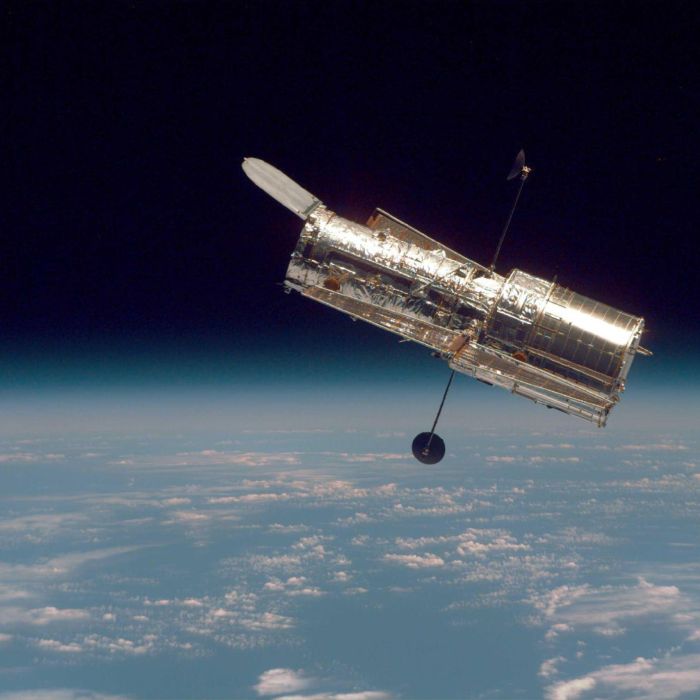
NASA’s Neil Gehrels Swift Observatory was designed to respond to some of the universe’s shortest-lived and most energetic events. Rather than simply surveying a fixed patch of sky, Swift could detect a sudden burst of high-energy radiation and turn its instruments toward the source. That ability made the spacecraft unusually well suited to gamma-ray bursts, explosions that can briefly outshine enormous numbers of stars. The mission combined a wide-field burst detector with narrower X-ray and ultraviolet/optical telescopes. When an alert arrived, a rapid change in pointing direction helped scientists collect information while the event was still evolving. For researchers on Earth, the result was more than a dramatic photograph: it was a time-stamped record of how the same source behaved in different parts of the electromagnetic spectrum. That combination has shaped the modern study of transient astronomy.
Why the mission is ending
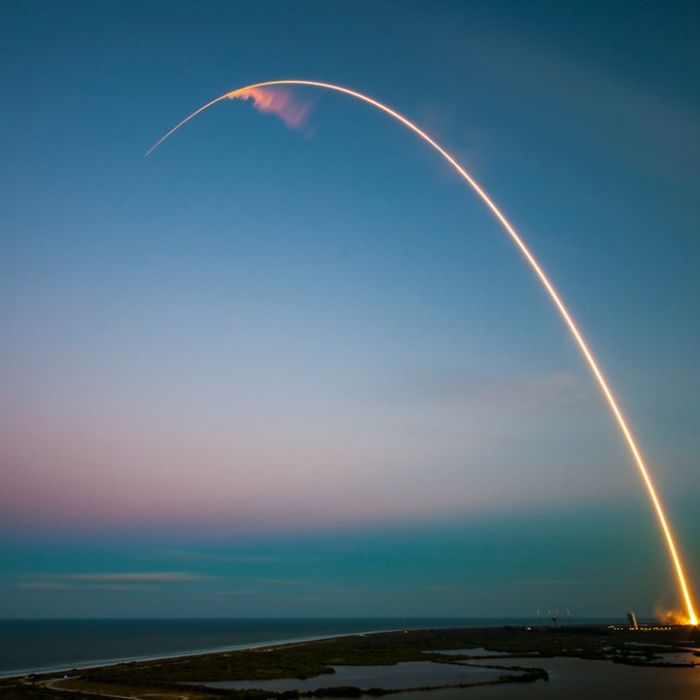
NASA reported on October 23, 2026, that Swift had ended its science operations as its orbit decayed. The agency said the spacecraft had descended below roughly 171 miles, or 275 kilometers, where atmospheric drag made it increasingly difficult for its telescopes to maintain steady observations. Satellites in low Earth orbit encounter traces of the upper atmosphere even where the sky appears empty. Collisions with those particles gradually take energy from an orbit, lowering the spacecraft and exposing it to still more drag. For an observatory whose work depends on stable pointing, that creates a practical limit long before the final re-entry. Ending the observing program does not erase the mission’s achievements or the archive of measurements it leaves behind. It marks the point at which the engineering conditions needed for reliable science could no longer be maintained.
What gamma-ray bursts reveal
Gamma-ray bursts are brief flashes of extremely energetic radiation. Some are associated with the collapse of massive stars, while others are linked to mergers involving compact objects such as neutron stars. Their brightness makes them visible across extraordinary cosmic distances, although identifying a burst’s physical origin takes more than detecting the initial flash. Astronomers study the fading afterglow at X-ray, ultraviolet, optical and sometimes radio wavelengths to estimate distance, characterize the surrounding material and test models of the explosion. Swift’s capacity to trigger follow-up observations quickly was therefore central to its value. A delayed observation might miss the most informative phase of a fading source. A coordinated response can connect an initial high-energy signal to the galaxy or environment where it occurred, turning a fleeting event into evidence about stellar evolution and the behavior of matter under extreme conditions.
The value of three instruments working together
Swift carried the Burst Alert Telescope, the X-Ray Telescope and the Ultraviolet/Optical Telescope. Each addressed a different part of the same scientific puzzle. The wide-field detector helped discover and locate sudden bursts. The narrower instruments could then investigate the afterglow in greater detail. This division of labor illustrates an important principle in astronomy: no single wavelength gives a complete description of a distant object. Dust may obscure visible light while X-rays still escape. An ultraviolet signature may change on a different timescale from the high-energy emission. Comparing these signals helps researchers reject explanations that fit one measurement but fail against the others. Swift’s instruments were designed as a coordinated observing system, and their combined records are more useful than three unrelated catalogs would have been.
Why speed matters in transient astronomy
Many astronomical objects change slowly enough that a telescope can revisit them months later. Gamma-ray bursts and other transient events do not offer that luxury. Their early light can carry information about shocks, jets, surrounding gas and the immediate aftermath of an explosion. As the signal fades, some of those clues become much harder to recover. Swift’s rapid-response design shortened the gap between detection and follow-up, while alerts enabled observatories around the world to join the effort. The larger achievement was organizational as well as technological. Spacecraft instruments, ground-based telescopes, software and scientific teams could respond to the same event on a shared timetable. That model now underpins much of the broader effort to study gravitational-wave counterparts, unusual stellar outbursts and other fast-changing phenomena.
A legacy beyond a single class of explosion
Although gamma-ray bursts were central to Swift’s identity, a flexible high-energy observatory can study many kinds of variable objects. Black-hole systems, active galaxies and stellar explosions all produce changing radiation that can reward repeated or rapid observations. The mission’s long operating life also allowed researchers to compare events across years rather than relying on a handful of exceptional cases. A single striking burst can inspire a hypothesis; a substantial archive makes it possible to test whether that event was typical. Long-running missions help reveal rare cases, observational biases and patterns that only emerge from many detections. The scientific legacy is therefore not just a list of discoveries but a body of data that can be reanalyzed with better methods and compared with observations from newer facilities.
What happens to the data now
The end of a spacecraft’s active life does not mean its science ends on the same day. Archived observations can support fresh work for years, particularly when new instruments observe the same region of the sky or when researchers develop improved analysis techniques. Scientists may revisit older Swift measurements to compare a source’s historical behavior with a new outburst, search for overlooked patterns or refine estimates made with earlier calibration tools. Reproducibility matters here: useful archives need clear timestamps, instrument information and documented processing methods. Students and researchers who never worked on the original mission can still ask questions of the data. The continued value of an observatory is partly determined by how accessible and interpretable its records remain after the hardware stops operating.
The engineering lesson from a long mission
Swift also demonstrates the tension between scientific ambition and the physical limits of spacecraft operations. A satellite needs power, communication, attitude control and a stable orbit to make precise observations. Every component ages, and even a functioning instrument can become ineffective if the platform can no longer point accurately. Low Earth orbit is especially dynamic because atmospheric density changes with solar activity and other conditions. Mission teams must continually balance observation priorities against spacecraft safety and operational margins. In Swift’s case, NASA identified orbital decay and increasing drag as the immediate constraint on steady observing. This distinction matters: an observatory can stop doing useful science without every instrument failing. Designing future missions means planning not only how discoveries will be made but how the spacecraft will be operated, maintained and ultimately retired.
What replaces Swift’s role?
No single telescope needs to reproduce every capability of a retiring observatory for the scientific field to move forward. Researchers increasingly combine specialized spacecraft, wide-field sky surveys and networks of ground observatories. Some facilities excel at finding events; others provide detailed spectra, sensitive imaging or repeated measurements. The challenge is to preserve the rapid handoff from an initial alert to coordinated follow-up. Swift helped establish expectations for that workflow, and future missions can improve on it with new detectors, faster data processing and better international coordination. The scientific need remains pressing because transient events reveal physics that cannot be recreated easily in laboratories. A disappearing signal is also an opportunity: the faster scientists can recognize and characterize it, the more information survives for later study.
Why the story matters worldwide
Swift was a NASA mission, but the scientific questions it addressed belong to a global research community. Astronomers in North America, South America, Europe, Asia, Africa and Australia use different observing sites and instruments to cover the sky as Earth rotates. Geographic distribution is a strength when an event fades over hours or days. A telescope in one longitude can pick up work as another observatory approaches daylight. International collaboration also allows researchers to compare independent measurements and develop a more complete picture of a source. The mission’s end is therefore more than an American space-program milestone. It is a reminder that durable scientific progress depends on shared alerts, accessible data and the ability to connect observations made by many institutions.
The next chapter in high-energy astronomy
The most important question after Swift is not simply which spacecraft takes its place. It is how the field can preserve the ability to notice a fleeting event, locate it accurately, observe it quickly and make the results useful to others. Advances in automated alerts and multi-messenger astronomy are expanding the kinds of signals that can trigger follow-up observations. Yet every improvement introduces practical demands: observatories must coordinate schedules, prioritize competing targets and communicate uncertainties clearly. Swift’s record shows the scientific value of a mission designed around responsiveness. Its operational chapter has closed, but its observations and the methods it helped normalize will remain part of how astronomers study a universe that does not wait for a telescope to be ready.
This is a process diagram, not a numerical performance chart.
Frequently asked questions
Why did NASA end the Swift mission?
NASA said orbital decay and increased atmospheric drag made steady telescope pointing impractical at the spacecraft’s low altitude.
What did Swift study?
It was best known for gamma-ray bursts, while also observing a broad range of changing high-energy astronomical sources.
Can scientists still use Swift observations?
Yes. Archived measurements can be reanalyzed and compared with newer observations long after the spacecraft stops collecting data.
Source: NASA’s October 23, 2026 mission announcements. Reporting reflects the agency’s published account; the mission’s scientific history is summarized for general readers.