Trump and Xi Are About to Meet. The World Is Watching.
There are diplomatic meetings that matter to the countries involved, and then there are meetings that can affect almost every major geopolitical calculation on the planet.
The upcoming meeting between U.S. President Donald Trump and Chinese President Xi Jinping belongs firmly in the second category.
Xi Jinping will travel to the United States from September 23 to 25 for a state visit at Trump’s invitation, according to China’s Foreign Ministry. The announcement came on September 21, putting the meeting at the centre of an extraordinary week of international diplomacy as world leaders gather in New York for the United Nations General Assembly. Chinese officials described the exchange between the two presidents within a six-month period as historically significant.
The timing could hardly be more consequential.
The United States and China are not simply negotiating tariffs or the price of imported goods. They are competing over technology, artificial intelligence, supply chains, military influence, Taiwan, critical minerals and the future structure of the international system.
At the same time, the United States is dealing with wars and security crises involving Iran, Ukraine and the Middle East, while China is expanding its economic and strategic influence across Asia and beyond.
That means the Trump-Xi meeting is not just another summit between two presidents.
It is a meeting between the leaders of the world’s two most consequential strategic competitors at a moment when the global balance of power is undergoing major changes.
Xi Is Coming to Washington at a Very Different Moment
The last several years have fundamentally changed the relationship between Washington and Beijing.
The era when economic interdependence was expected to steadily reduce political tensions has given way to an era of strategic competition.
The United States wants to protect its technological advantages and strengthen its alliances across the Indo-Pacific. China wants to maintain access to global markets while reducing vulnerabilities created by dependence on Western technology and financial systems.
Both sides continue to trade on a massive scale, but that economic relationship now exists alongside growing national-security concerns.
Semiconductors are no longer simply commercial products.
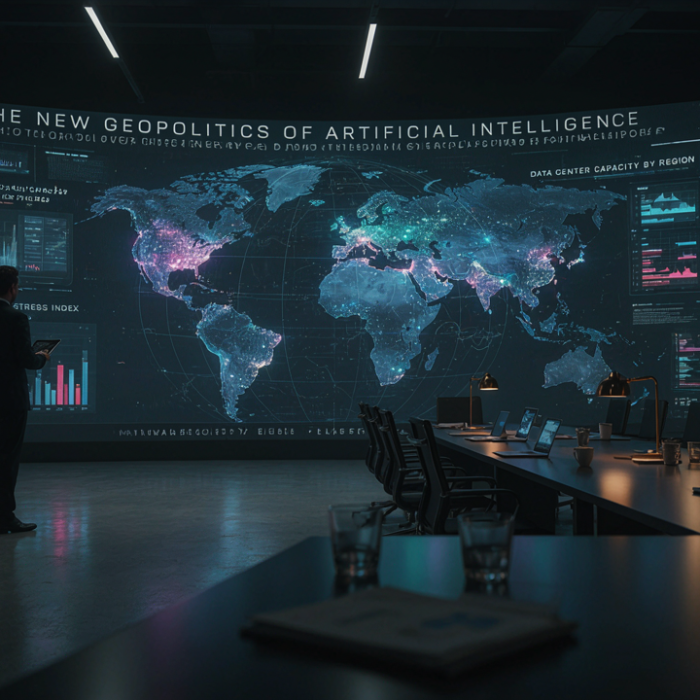
Artificial intelligence is no longer simply a technology industry.
Rare earths are no longer simply mining commodities.
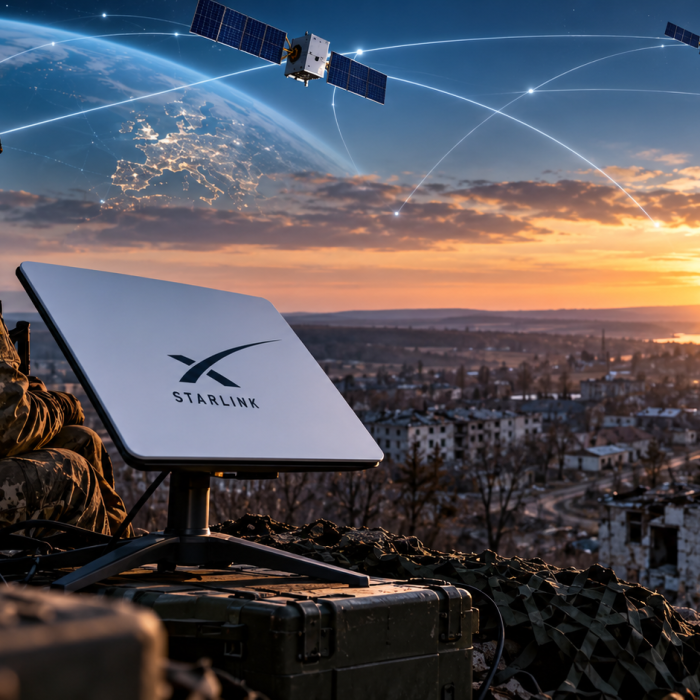
Ports, telecommunications networks, satellites, energy infrastructure and shipping routes can all become strategic assets.
This is why even apparently technical discussions between Washington and Beijing can have consequences far beyond economics.
The Trump-Xi meeting comes into this environment with both governments trying to manage competition without allowing it to spiral into a larger confrontation.
Taiwan Will Be Sitting in the Room Even If Taiwan Is Not
Perhaps the most sensitive issue surrounding the summit is Taiwan.
Washington has repeatedly emphasized the importance of peace and stability across the Taiwan Strait, while Beijing regards Taiwan as part of China and strongly opposes moves that it believes could formalize or strengthen the island’s separate international status.
Just one day before Xi’s visit, U.S. Secretary of State Marco Rubio met with the foreign ministers of Japan and South Korea in New York. The three countries reaffirmed their security cooperation, opposed economic coercion and emphasized the importance of peace and stability across the Taiwan Strait. The United States also reiterated its defence commitments to Japan, South Korea and Taiwan.
The timing is impossible to ignore.
Washington is preparing to welcome Xi while simultaneously reassuring its regional allies that engagement with Beijing will not mean abandoning the existing security architecture in Asia.
For Beijing, the issue is equally important.
China wants Washington to respect what it considers its core interests, particularly regarding Taiwan. The question is how far Trump is willing to go in accommodating Chinese concerns while maintaining U.S. commitments to its allies and partners.
This is one of the reasons the summit could be extremely difficult.
A trade agreement can be written down.
Taiwan is fundamentally a question of sovereignty, security and military deterrence.
Trade Is Still at the Heart of the Relationship
Despite all the geopolitical tension, economics will remain one of the most important parts of the meeting.
The two countries have spent years imposing tariffs, export restrictions and other measures against each other.
The result has been a partial restructuring of global supply chains as companies attempt to reduce exposure to geopolitical risks.
But the economic relationship between the United States and China remains enormous.
That creates a paradox.
Washington and Beijing are strategic competitors, yet their economies remain deeply interconnected.
China continues to be a major supplier of goods to the United States, while American companies remain deeply connected to Chinese manufacturing and consumer markets.
Reuters reported ahead of the summit that Chinese exports remain strong despite U.S. efforts to restrict them, with more than half of U.S.-imported Chinese product categories showing growth compared with 2025.
That creates pressure on both governments.
Trump wants better terms for American businesses and workers.
Xi wants predictable access to major global markets and an economic environment that does not undermine China’s development strategy.
Neither side has an incentive to allow the relationship to collapse completely.
The question is whether they can establish enough stability to prevent economic competition from becoming permanent economic separation.
Artificial Intelligence Is Becoming a Geopolitical Weapon
There is another subject that makes this summit fundamentally different from many previous U.S.-China meetings: artificial intelligence.
AI has become one of the most strategically important technologies in the world.
The country that develops the strongest AI systems could gain advantages in areas ranging from manufacturing and scientific research to intelligence analysis, cybersecurity and military planning.
That is why Washington has imposed restrictions on certain advanced technologies and semiconductor exports to China, while Beijing has invested heavily in developing domestic alternatives.
The competition is no longer simply about who sells more smartphones or computers.
It is increasingly about who controls the technological infrastructure of the next generation.
The Trump-Xi summit therefore has implications for the global AI industry.
Any agreement on technology restrictions, semiconductor access or AI cooperation could influence companies, researchers and supply chains around the world.
It could also determine whether the emerging AI ecosystem becomes increasingly divided into American and Chinese technology spheres.
That would be a major change for the global internet and technology industry.
The Iran War Complicates Everything
The summit is also taking place against the backdrop of a major Middle Eastern crisis.
Trump’s diplomatic agenda this week includes the continuing conflict involving Iran, while the United States is simultaneously trying to manage tensions involving Ukraine and the wider Middle East. Reuters reported on September 22 that Trump’s UN schedule includes meetings with leaders from multiple regions as he attempts to navigate these overlapping crises.
China’s position is important here.
Beijing has significant economic interests in the Middle East and remains an important buyer of energy from the region. China also has relationships with countries involved in the wider conflict.
That means Washington may want Chinese cooperation on regional stability.
Beijing, however, has its own calculations.
China does not want a prolonged regional conflict that threatens energy supplies or global trade, but it also has no reason to simply adopt Washington’s strategic position.
This creates another potential area of negotiation.
The United States and China may disagree fundamentally about global power, but both have reasons to avoid uncontrolled instability.
The Summit Is Also About Russia
Russia will not be the only subject of the meeting, but Moscow’s position will inevitably form part of the broader strategic picture.
China and Russia have developed a much closer relationship over the past several years, particularly as Russia’s confrontation with the United States and Europe has intensified.
Washington therefore has to consider the possibility that pressure on China could push Beijing closer to Moscow.
At the same time, Beijing has an interest in maintaining its relationship with Russia without allowing that partnership to create unnecessary economic or diplomatic costs with the United States.
This is one of the central features of the emerging international system.
China is not simply choosing between Washington and Moscow.
It is trying to maintain relationships with multiple major powers while increasing its own strategic autonomy.
Trump, meanwhile, has his own objective: negotiating from a position that gives the United States maximum leverage without pushing China into a permanently hostile economic and strategic bloc.
The summit is therefore partly about managing the triangle between Washington, Beijing and Moscow.
Why China’s Economic Position Matters
Xi is arriving in Washington with a strong economic story to present.
China’s trade machine has remained powerful despite years of Western efforts to reduce strategic dependence on Chinese manufacturing.
That does not mean China’s economy is without problems. Beijing continues to face structural challenges, including weak domestic demand in some areas, property-sector difficulties and broader concerns about long-term growth.
But China’s export strength gives Xi leverage.
The United States can impose restrictions, but completely replacing Chinese manufacturing capacity would be extremely difficult and expensive.
That reality is part of what makes negotiations complicated.
Both governments have tools that can hurt the other.
China can influence critical supply chains, manufacturing and important commodities.
The United States has enormous influence over advanced semiconductor technology, financial markets and global technology ecosystems.
Neither side has unlimited power.
That is precisely why the summit matters.
This Is Bigger Than a Trade Truce
There is a temptation to judge the meeting only by whether Trump and Xi announce a major trade agreement.
That would miss the larger geopolitical story.
The real question is whether the United States and China can establish a framework for managing competition over the next several years.
A temporary agreement could reduce immediate tensions.
But it would not resolve the fundamental disagreements over Taiwan, technology, military power, trade, human rights, critical minerals or the future of the international order.
Those disputes are structural.
They will not disappear because two leaders shake hands.
What matters is whether both governments can establish mechanisms that prevent those disputes from repeatedly escalating into crises.
That may ultimately be the most important outcome of the summit.
The Rest of Asia Is Watching Closely
The countries most directly affected by U.S.-China competition are not sitting at the negotiating table.
Japan is watching.
South Korea is watching.
India is watching.
Australia is watching.
Southeast Asian countries are watching.
For many of these countries, the central strategic challenge is not choosing between the United States and China.
It is avoiding being forced to choose.
They want access to China’s enormous market while maintaining security relationships with Washington and other partners.
That becomes increasingly difficult if U.S.-China competition turns into a rigid geopolitical division.
The outcome of the Trump-Xi meeting could therefore influence diplomatic decisions across the Indo-Pacific.
If Washington and Beijing reduce tensions, regional governments may gain more room to pursue flexible foreign policies.
If the relationship deteriorates, countries could face increasing pressure to align more clearly with one side or the other.
The World Is Watching What Happens After the Handshake
The images from Washington will probably be dramatic.
Trump and Xi sitting across from each other.
Flags behind them.
Statements about cooperation.
Talk of peace, stability and economic opportunity.
But the real story will be hidden in the details.
What happens to tariffs?
What happens to semiconductor restrictions?
What does Washington say about Taiwan?
What does Beijing demand in return?
Will the two governments create new mechanisms for military communication?
Will they cooperate on global crises?
Will they reduce tensions over technology?
And most importantly, will whatever agreements emerge survive the next geopolitical crisis?
That is the real test.
A New Phase in the US-China Rivalry?
Xi Jinping’s September 23-25 state visit is being described by China as historically significant because it represents another direct meeting between the two presidents within a six-month period.
But history will ultimately judge the meeting by what comes after it.
The world is moving toward a more fragmented geopolitical system in which economic power, military power and technological power increasingly overlap.
The United States remains one of the world’s dominant military, financial and technological powers.
China is a major economic and industrial power with rapidly expanding technological and strategic capabilities.
Their relationship will influence everything from semiconductor supply chains to the security of the Taiwan Strait, from global trade to artificial intelligence, and from the future of the Indo-Pacific to the structure of international institutions.
That is why this summit matters.
It is not simply about Trump and Xi.
It is about whether the world’s two largest powers can compete without turning their rivalry into a wider global confrontation.
And for the rest of the world, that may be the most important geopolitical question of 2026.
Fact-Check and Editorial Notes
This article is based on developments reported on September 21-22, 2026, with particular emphasis on the official announcement of Xi Jinping’s September 23-25 state visit and reporting surrounding the upcoming Trump-Xi summit.
China’s Foreign Ministry officially confirmed Xi’s visit on September 21, stating that the visit is being made at Trump’s invitation.
Reuters has separately reported that the summit is expected to address major economic and geopolitical issues and that the United States has been reinforcing its commitments to Japan, South Korea and Taiwan ahead of Xi’s arrival.
The article distinguishes between confirmed developments and analysis of their potential geopolitical consequences. It does not assume that the summit will produce a particular agreement or outcome.
Frequently Asked Questions?
The meeting brings together the leaders of the United States and China at a time when the two countries are competing over trade, technology, Taiwan, artificial intelligence, supply chains and global influence. The outcome could affect economic and security policies well beyond the two countries.
China’s Foreign Ministry announced that Xi Jinping will make a state visit to the United States from September 23 to September 25, 2026, at the invitation of President Donald Trump.
It could reduce tensions or establish agreements in specific areas, but major structural disagreements remain over Taiwan, technology, trade and strategic competition. Any lasting change would depend on what both governments implement after the summit rather than the diplomatic meeting alone.